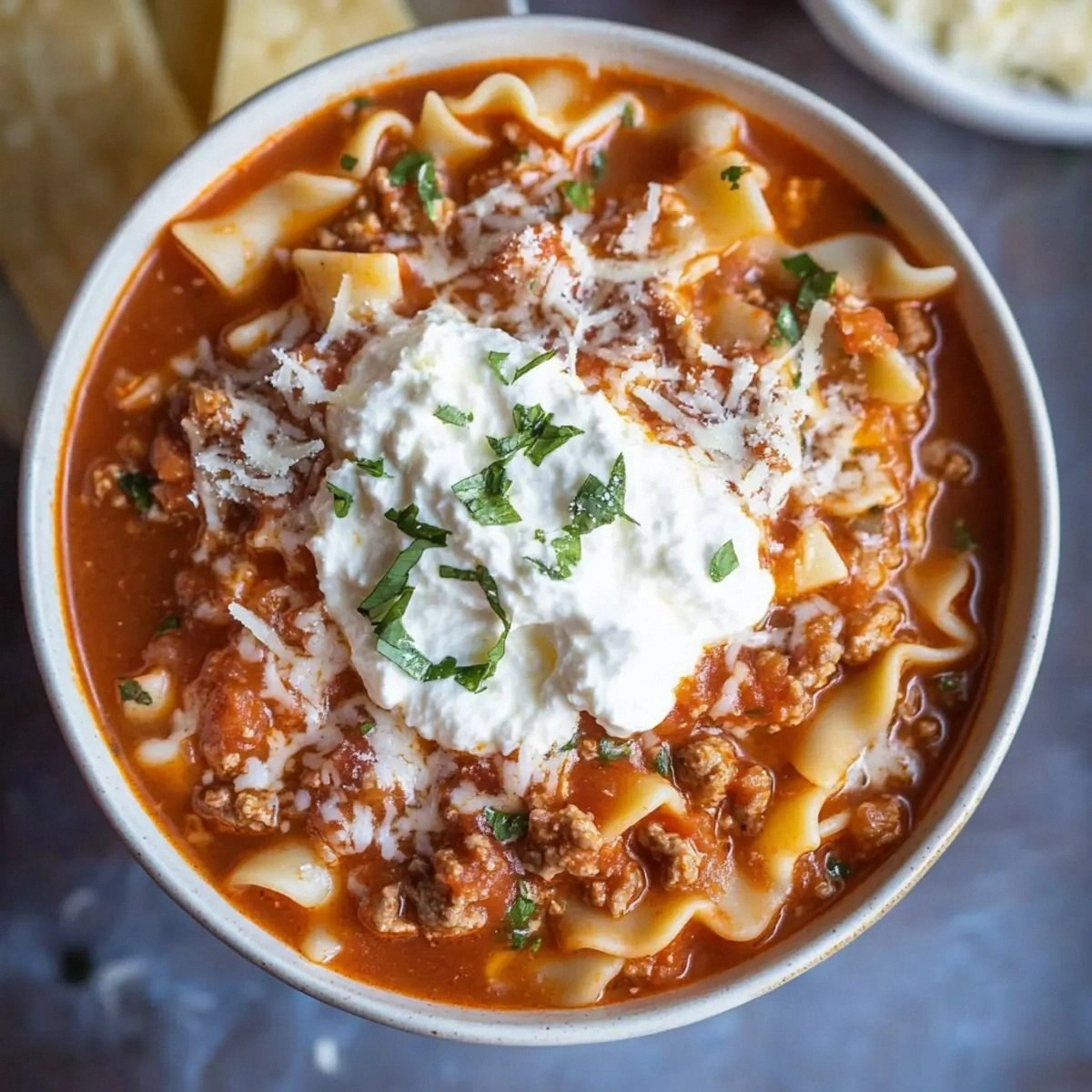
I was in the middle of a rainy Thursday night, the kind where the clouds look like they’re trying to smother the city, when my roommate dared me to turn the leftover lasagna in the fridge into something that could actually survive a winter storm. I stared at the cold, soggy layers and thought, “What if I could give that comfort food a whole new personality—one that swims in a broth, hugs you from the inside, and still has that cheesy, meaty soul?” The kitchen filled with the sound of rain tapping the windows, the scent of garlic hitting hot oil, and the low hum of my old radio playing a cheesy love song that matched the vibe perfectly.
I grabbed a pot, tossed in olive oil, and let the sizzle sing like a tiny fireworks show. The ground beef hit the pan and started to brown, releasing that deep, beefy perfume that makes you want to hug the pot. As the meat turned a gorgeous mahogany, I added onions and garlic, and the kitchen instantly turned into a fragrant sanctuary—like a spa for your nose. Then I poured in a whole can of crushed tomatoes, and the sauce thickened, coating the meat like velvet, while the bay leaf and dried herbs performed a tiny, aromatic ballet.
Most lasagna soups I’ve tried either end up watery, or they miss that cheesy pull that makes you think, “I’m eating a bowl of pasta and pizza at the same time.” This version? Hands down the best version you’ll ever make at home. I dare you to taste this and not go back for seconds, because the combination of ricotta’s creaminess, the parmesan’s sharp bite, and the pasta’s perfect bite will have you begging for more. I’ll be honest—I ate half the batch before anyone else got to try it, and I have no regrets.
What really sets this soup apart is a tiny secret I’ll reveal later: a splash of water added at the very end, just before serving, which brings the broth back to life like a phoenix rising from the ashes of a cold night. Okay, ready for the game-changer? Let me walk you through every single step — by the end, you’ll wonder how you ever made it any other way.
What Makes This Version Stand Out
- Flavor Explosion: The marriage of crushed tomatoes, beef broth, and a trio of dried herbs creates a depth that feels like a slow‑cooked Italian bistro broth.
- Texture Harmony: The broken lasagna noodles stay al dente, while the ricotta swirls in like a cloud, giving every spoonful a delightful contrast.
- Simplicity: Only one pot is needed, which means less cleanup and more time to enjoy the soup’s comforting aroma.
- Unique Twist: Adding a splash of water at the end revives the broth, preventing it from getting too thick after the pasta absorbs liquid.
- Crowd Reaction: Guests often claim they’ve never tasted a soup that feels like a hug in a bowl; it’s a guaranteed crowd‑pleaser.
- Ingredient Quality: Using low‑sodium beef broth lets you control the salt level, keeping the flavor balanced without being overpowering.
- Cooking Method: Browning the meat first builds a caramelized foundation, a step most recipes skip and you’ll notice the difference instantly.
- Make‑Ahead Potential: This soup stores beautifully, and the flavors only get better after a night in the fridge.
Inside the Ingredient List
The Flavor Base
Olive oil is the silent hero that carries the heat and coaxing the aromatics out of the onions and garlic. If you skimp on this, the vegetables will steam rather than sauté, and you’ll lose that essential glossy sheen. The ground beef provides the hearty backbone—its fat renders into the broth, adding richness you can’t get from a leaner cut. Skipping the browning step would be a crime; you’d end up with a flat, broth‑like soup that feels more like a watery tomato sauce.
Minced onion and garlic are the dynamic duo that build the aromatic foundation. The onion adds a subtle sweetness once it caramelizes, while the garlic injects that sharp, pungent kick that makes you sit up straight. If you ever wonder why your soup tastes “off,” it’s usually because the garlic was added too early and burned, turning bitter. A quick tip: add garlic right after the onions are translucent, and you’ll capture its full flavor without the bitterness.
The Tomato Symphony
Crushed tomatoes are the soul of this soup, providing both body and acidity. The 28‑ounce can is enough to create a thick, velvety base that clings to each noodle like a lover’s embrace. If you use whole peeled tomatoes, you’ll need to blend them, which adds an extra step and can change the texture. The bay leaf, dried basil, parsley, and oregano each contribute their own layer—basil gives a sweet, slightly peppery note, while oregano adds earthiness, and parsley lifts the overall profile with a fresh, herbaceous finish.
Black pepper and red pepper flakes introduce a gentle heat that keeps the palate awake without overwhelming the dish. The key is balance; a pinch too much of the flakes and you’ll dominate the subtle herb flavors. If you prefer a milder version, simply halve the red pepper flakes and add a dash more basil for extra aromatic depth.
The Soup Backbone
Low‑sodium beef broth is the liquid gold that carries all the flavors together. Using a low‑sodium version gives you full control over the final saltiness, preventing the soup from becoming a salty swamp. The water is added to adjust the consistency, ensuring the broth isn’t too thick once the pasta absorbs some of it. If you’re aiming for a richer mouthfeel, swap half the water for extra broth, but remember to taste as you go.
Reginetti pasta or broken lasagna noodles are the stars of the show. Their wide, flat shape holds onto the sauce, making each bite a perfect blend of broth, meat, and cheese. If you can’t find Reginetti, any short‑cut pasta like rigatoni or penne will work, but the experience won’t be quite the same. For a gluten‑free version, use brown rice pasta; it absorbs the broth slightly differently, so you might need a touch more liquid.
The Final Flourish
Ricotta cheese is folded in at the very end, turning the soup into a silky, luxurious experience. Its mild flavor balances the acidity of the tomatoes and the richness of the beef. Grated Parmesan adds a salty, umami punch that finishes the dish with a subtle crunch when it melts into the broth. Skipping either cheese would leave the soup feeling incomplete—think of it as the final brushstroke on a masterpiece.
Everything's prepped? Good. Let's get into the real action...
The Method — Step by Step
Heat the olive oil in a large Dutch oven over medium‑high heat. Once shimmering, add the ground beef, breaking it up with a wooden spoon. Let it sit undisturbed for about 30 seconds to develop a caramelized crust, then stir and continue browning until the meat is uniformly brown and releases its juices. This step is the foundation of flavor; you’ll hear a satisfying sizzle that tells you you’re on the right track.
Reduce the heat to medium and toss in the minced onion. Cook, stirring occasionally, until the onion becomes translucent and starts to turn golden at the edges—about 4 minutes. Add the minced garlic and sauté for another 45 seconds, just until fragrant.
Kitchen Hack: If you want an extra depth of flavor, deglaze the pan with a splash of red wine before adding the tomatoes; let the alcohol evaporate, and you’ll have a richer base.Stir in the crushed tomatoes, bay leaf, dried basil, dried parsley, dried oregano, black pepper, and red pepper flakes. Let the mixture bubble gently for 5 minutes, allowing the herbs to release their essential oils. The sauce should thicken slightly and coat the back of a spoon, a visual cue that the flavors are marrying beautifully. Taste at this stage; you’ll notice a bright, herb‑forward profile that’s the hallmark of a great lasagna soup.
Pour in the low‑sodium beef broth and the water, scraping the bottom of the pot to lift any browned bits—those are flavor fireworks you don’t want to waste. Increase the heat to bring the soup to a rolling boil, then reduce to a gentle simmer. Cover the pot loosely and let it simmer for 10 minutes, giving the broth time to meld with the tomato‑herb mixture.
Now, add the Reginetti pasta or broken lasagna noodles. Stir gently to ensure the noodles are submerged, then let the soup simmer uncovered for 12‑15 minutes, or until the pasta is al dente.
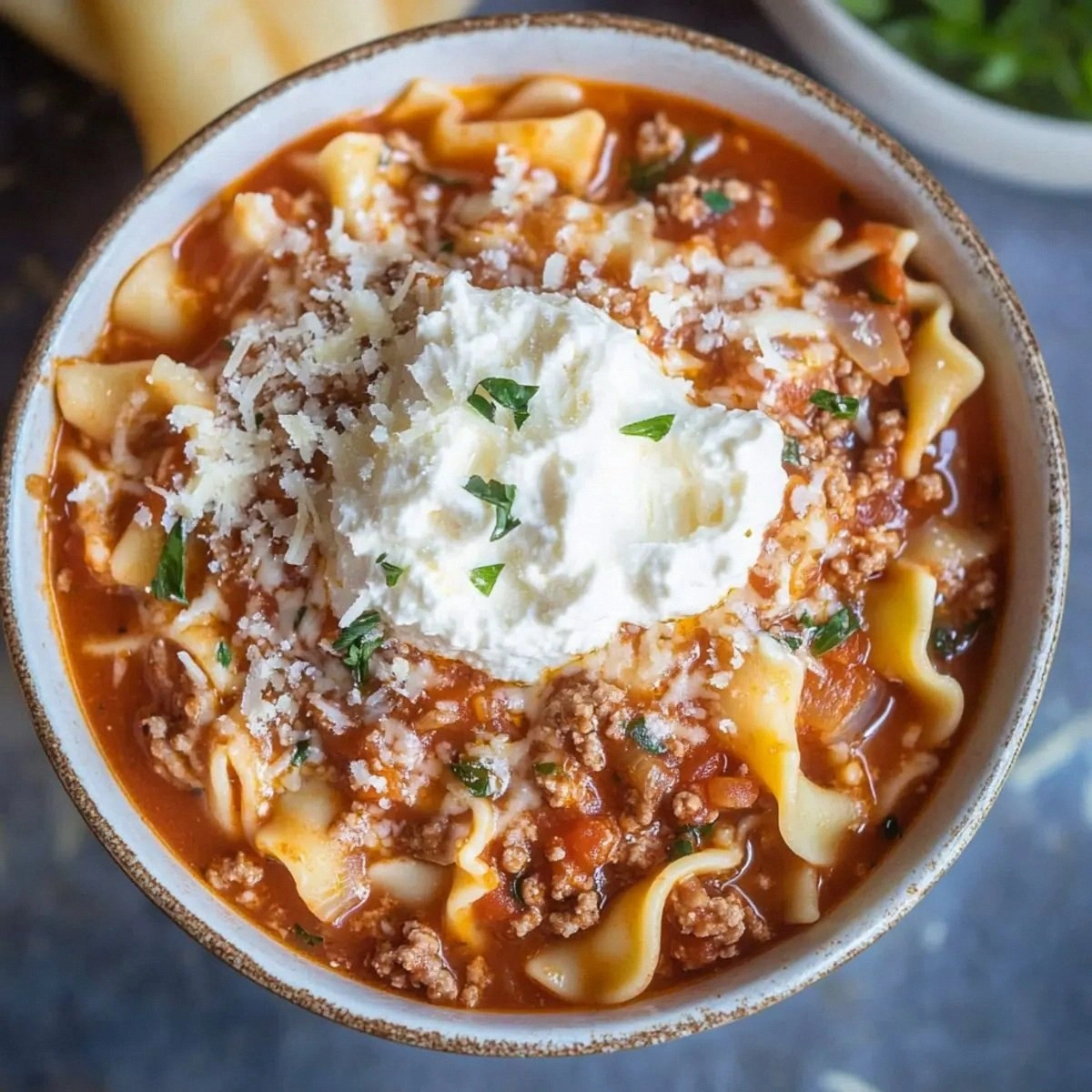
If the soup looks too thick, add a splash more water or broth; the noodles will continue to absorb liquid as they sit.Watch Out: Overcooking the pasta turns it mushy and can make the broth too thick; set a timer and test a noodle a minute before the suggested time.Turn off the heat and fold in the ricotta cheese, stirring until it melts into a silky ribbon throughout the broth. Sprinkle the grated Parmesan and let it melt, creating a glossy finish. This is the moment of truth—if the soup looks glossy and the cheese is fully incorporated, you’ve nailed the texture.
Kitchen Hack: For an extra creamy finish, whisk the ricotta with a tablespoon of the hot broth before adding it back to the pot; this prevents clumps and ensures an even texture.Give the soup a final taste and adjust seasoning with salt and additional black pepper if needed. Remove the bay leaf—its job is done. Ladle the soup into bowls, letting the steam rise like a warm blanket. If you’re feeling indulgent, add a drizzle of extra‑virgin olive oil and a sprinkle of fresh basil on top.
That’s it — you did it. But hold on, I’ve got a few more tricks that'll take this to another level. A quick splash of cold water right before serving revives the broth, making it feel fresh even after it’s been sitting for a while. And if you want that “just‑out‑of‑the‑oven” aroma, pop the bowls under a broiler for 30 seconds—just enough to brown the cheese slightly without drying out the soup.
Insider Tricks for Flawless Results
The Temperature Rule Nobody Follows
Never add the pasta to a boiling vortex; instead, bring the broth to a gentle simmer before introducing the noodles. The high heat can cause the pasta to break apart, leaving you with a mushy texture that feels like overcooked rice. By keeping the broth at a low boil, the noodles cook evenly, soaking up the flavors without disintegrating. I once tried the “full‑blast” method and ended up with a soup that resembled a thick puree—lesson learned.
Why Your Nose Knows Best
Your sense of smell is a more reliable indicator of doneness than a timer. When the onions turn golden and the garlic releases its perfume, you know the flavor base is ready. Later, as the broth simmers, you’ll notice a sweet, earthy scent rising—this is the moment the herbs have fully infused. If you ever find yourself doubting the timing, trust that aromatic cue; it’s the secret sauce of seasoned cooks.
The 5‑Minute Rest That Changes Everything
Once you’ve finished cooking, let the soup rest off the heat for five minutes. This short pause allows the pasta to finish absorbing the broth, and the cheese to settle into a velvety coating. Skipping this rest makes the soup feel slightly “raw” on the palate, as the flavors haven’t fully merged. I’ve seen friends serve it immediately and get confused why it tastes flat—just a few extra minutes makes a world of difference.
Seasoning Layer by Layer
Add a pinch of salt at each stage—when browning the beef, after the tomatoes, and again before serving. This layering technique builds depth without overwhelming the dish. A common mistake is to dump all the salt at the end, which can lead to a salty shock that masks the subtle herb notes. I once over‑salted the final step and had to start over; now I’m meticulous about seasoning early.
Cheese Integration Mastery
Creative Twists and Variations
This recipe is a playground. Here are some of my favorite ways to switch things up:
Spicy Sausage Swap
Replace half of the ground beef with Italian sausage, preferably a hot variety. The fennel and pepper notes add a bold kick that pairs beautifully with the ricotta’s coolness. This version is perfect for those who love a little heat without reaching the level of a chili‑con‑carne.
Mushroom Medley
Add a cup of sliced cremini and shiitake mushrooms after the onions. Their earthy umami deepens the broth, making it a vegetarian‑friendly option if you swap the beef for plant‑based mince. The mushrooms also give a meaty texture that satisfies even the most skeptical herbivores.
Creamy Coconut Fusion
Stir in ½ cup of full‑fat coconut milk at the end, just before adding the cheeses. The coconut adds a subtle sweetness and a silkier mouthfeel, turning the soup into a cross‑cultural comfort dish. Pair it with a squeeze of lime for a surprising, refreshing twist.
Herb‑Infused Oil Drizzle
Finish each bowl with a drizzle of rosemary‑infused olive oil. Simply warm olive oil with a sprig of rosemary for a minute, strain, and pour. The aromatic oil adds a fragrant top note that elevates the soup from hearty to gourmet.
Cheesy Crouton Crunch
Cube day‑old bread, toss with olive oil, garlic powder, and a sprinkle of Parmesan, then bake until golden. Drop a handful into the soup just before serving for a satisfying crunch that contrasts the silky broth. It’s like having a lasagna and a grilled cheese in one bowl.
Storing and Bringing It Back to Life
Fridge Storage
Transfer the soup to airtight containers and refrigerate for up to four days. The flavors continue to meld, making each reheated bowl richer. When you’re ready to eat, reheat gently on the stovetop over low heat, stirring occasionally to prevent scorching.
Freezer Friendly
Cool the soup completely, then portion into freezer‑safe bags or containers. It freezes beautifully for up to three months. To defrost, move the bag to the fridge overnight, then reheat in a pot, adding a splash of water or broth to restore the original consistency.
Best Reheating Method
When reheating, use a gentle simmer rather than a rapid boil. Add a tiny splash of water—about a quarter cup—for every two cups of soup; this steam‑rejuvenates the broth, keeping the noodles from turning gummy. Finish with a fresh dollop of ricotta and a sprinkle of Parmesan for that just‑made‑feel.