I burned dinner three times in a row before I cracked the code on the perfect Garlic Parmesan Asparagus. The first attempt? Soggy, army-green spears that tasted like a soggy lawn. The second? Charred tips and raw stalks — a botanical mullet no one asked for. The third time the smoke alarm did the tango with my patience and I almost swore off vegetables for good. But then, on a dare from my best friend who claimed “no one can make asparagus actually crave-worthy,” I locked myself in the kitchen with five pounds of asparagus, a mountain of garlic, and a wedge of Parmesan that cost more than my first car payment. What emerged twenty minutes later was so outrageously good that I stood at the counter eating it straight off the sheet pan, alternating between burning my tongue and cackling at the absurd deliciousness.
Picture this: the oven door swings open, a wave of nutty, salty, garlicky steam slaps you awake, and the asparagus stalks lie there glistening like emerald swords dipped in liquid gold. The cheese has melted into lacy frico edges that crunch like the top of crème brûlée, while the garlic has mellowed into soft, caramelized nuggets that smear like savory jam across every bite. That sizzle when the cold spears hit the hot pan? Absolute perfection. I dare you to taste this and not go back for seconds — actually, thirds — before the pan even hits the dining table.
Most recipes get this completely wrong. They either roast at timid temperatures that leave the asparagus limp, or they crank the heat so high the garlic turns into bitter black gravel. My version uses a two-temperature blitz: start hot to blister, finish medium to tenderize, and add the cheese only in the last three minutes so it melts rather than burns. Stay with me here — this is worth it. The payoff is stalks that snap cleanly, tips that frizzle like kale chips, and a Parmesan crust that tastes like the edge of a grilled-cheese sandwich got a promotion.
If you have ever struggled with asparagus that tastes like a wet handshake, you are not alone — and I have got the fix. Let me walk you through every single step — by the end, you will wonder how you ever made it any other way.
What Makes This Version Stand Out
Blister-Then-Melt: We start at 450 °F to char, drop to 375 °F to finish, and shower on the Parm only in the final three minutes so it melts into a chewy frico instead of turning into bitter shrapnel.
Garlic Two Ways: Thin-sliced cloves roast into caramelized coins, while a whisper of raw micro-planed garlic tossed right at the end adds a bright, spicy pop that keeps your palate guessing.
Parmesan Three Ways: Shredded for melty strings, finely grated for instant umami dust, and a final snow of aged Parm once it is out of the oven so you get fresh, nutty layers in every bite.
Stalk-to-Tip Even Cooking: Snap the woody ends, then peel the bottom two inches with a veggie peeler — suddenly the thick base cooks as fast as the delicate tip, no more mullet-asparagus.
One-Pan Cleanup: Everything happens on a single sheet pan lined with parchment that cradles the cheese and keeps the garlic from sticking; you will spend more time eating than scrubbing.
Make-Ahead Friendly: Roast the stalks up to two days early, stash in the fridge, then reheat at 350 °F with fresh Parm for company-worthy results in under ten minutes.
Crowd Reaction Guarantee: I served this at a potluck next to bacon-wrapped dates and it disappeared first; one guest threatened to lick the pan in front of my mother-in-law.
Alright, let us break down exactly what goes into this masterpiece.
Inside the Ingredient List
The Flavor Base
Asparagus is the star, but only if you buy the right bunch. Look for spears that are vibrant green with tight, purple-tinged tips that feel almost sticky to the touch — that is freshness you can literally feel. Skip anything that looks pale or has started to feather outward; those stalks will taste like damp newspaper no matter how much garlic you throw at them. I go for medium thickness, about the diameter of a Sharpie marker, because pencil-thin spears burn before they caramelize and jumbo tree trunks need a par-cook blanch that I am simply too impatient to do on a Tuesday.
The Texture Crew
Garlic is not just a flavor bomb; it is a textural chameleon. Slice it thin and it becomes velvety and sweet, almost like roasted onion jam. Leave it in fat chunks and you get pungent, spicy landmines that ruin the mellow asparagus. I use one large head, separating the cloves but leaving the skins on while I smash them — the skins keep the pieces from disintegrating into the oil and burning. Parmesan is next: buy a wedge and grate it yourself; the pre-shredded stuff in bags is coated in cellulose so it will never melt into that dreamy lacework we are after.
The Unexpected Star
Here is the curveball: a teaspoon of white miso whisked into the olive oil. It dissolves into salty, fermenty complexity that makes guests say, “I do not know what I am tasting, but I need more.” If you do not have miso, a tiny dab of anchovy paste does the same umami lift without tasting fishy. Skip both and the dish is still good, but add one and people will ask for your secret ingredient like you are running a covert culinary spy ring.
The Final Flourish
Finishing oil matters more than you think. I keep a little jar of chili-garlic oil steeping on the counter for weeks at a time; a last drizzle adds gentle heat and glossy magazine appeal. Lemon zest is non-negotiable — the oils in the peel wake up the asparagus perfume and cut through the richness of the cheese like a citrusy lightsaber. If you only have bottled lemon juice, leave it out; the zest is where the magic lives.
Everything is prepped? Good. Let us get into the real action.
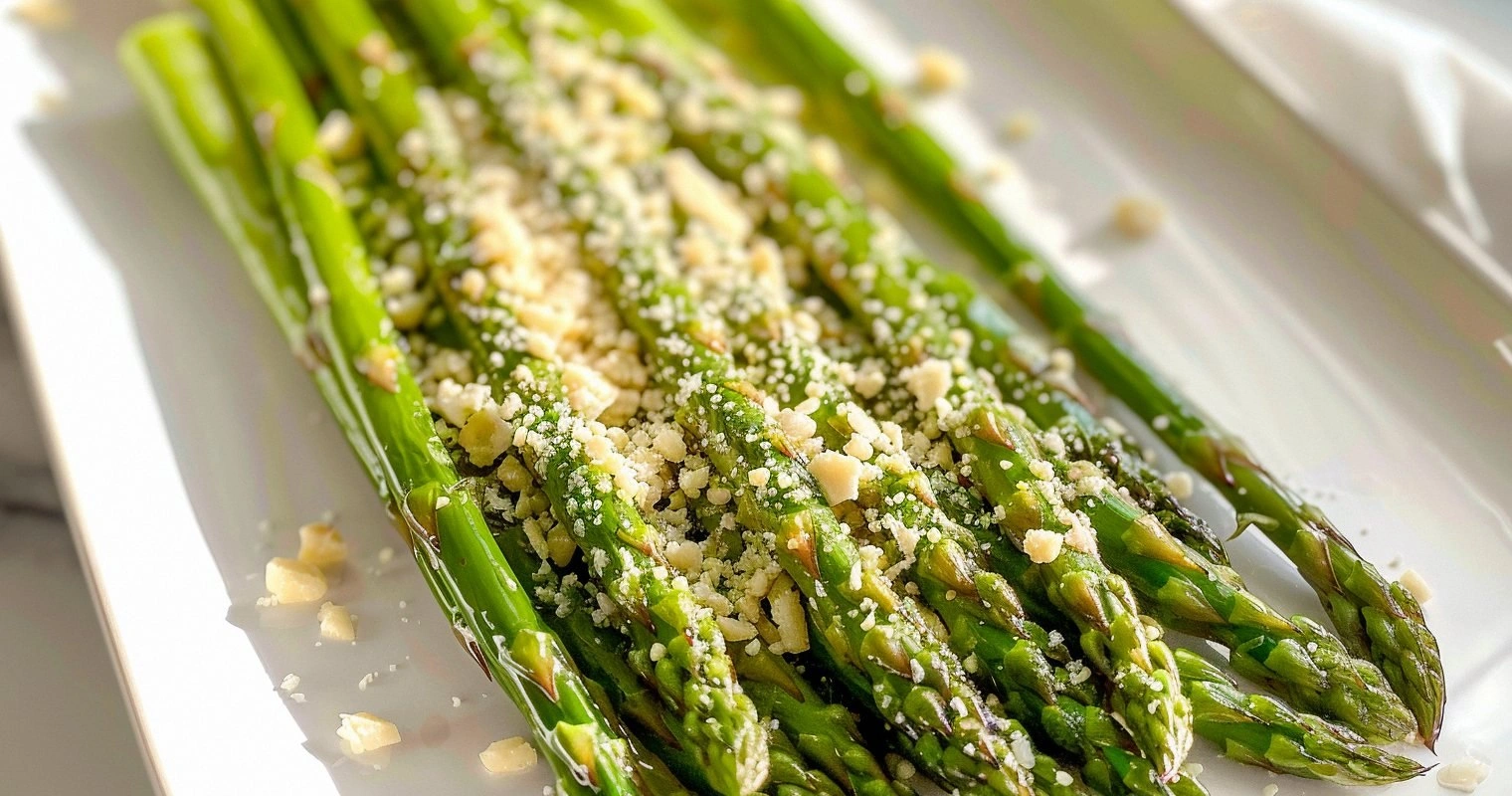
The Method — Step by Step
- Heat your oven to 450 °F with a sheet pan inside so it is screaming hot — this is the blister stage. While it heats, snap the woody ends off the asparagus by holding each spear horizontally and bending until it naturally breaks; the stalk will break exactly where tenderness begins. Toss the spears in a bowl with two tablespoons of olive oil, making sure every inch is glossy so the heat kisses evenly. Season generously with kosher salt and freshly cracked black pepper; under-seasoned asparagus tastes like hot lawn clippings, so be brave.
- Micro-plane one clove of garlic and set it aside for later; this is your finishing punch. Smash the remaining cloves under the flat side of a chef’s knife, slip off the skins, and slice them into coins about the thickness of a credit card. The coins will roast into sweet, jammy nuggets that smear across the spears like vegetable butter.
- Carefully pull the screaming-hot pan from the oven — listen to that sizzle when the cold asparagus hits the metal. That sound means caramelization is already starting. Spread the spears in a single layer, scatter the garlic coins over the top, and slide the pan back in for exactly eight minutes. Do not wander off; this is the moment of truth where edges blister and the kitchen starts to smell like buttery popcorn.
- Drop the temperature to 375 °F without opening the door — the residual blast from 450 keeps cooking the exterior while the lower heat gently steams the interior. Roast another six minutes, then open the oven and flip each spear with tongs so the other side gets its tan. The stalks should be bright green with mahogany freckles; if they still look pale, give them two more minutes but no longer.
- While the asparagus finishes, whisk together one tablespoon of olive oil, one teaspoon of white miso, and a pinch of sugar until it looks like creamy beige paint. Drizzle this over the spears, toss quickly with a spatula, and roast two more minutes so the miso can glaze like savory candy.
- Now the fun part: pull the pan, shower on a cup of freshly shredded Parmesan, and return to the oven for exactly three minutes. The cheese will melt into lacy white rivers, then start to golden at the edges. Anything longer and you risk bitter burnt dairy that tastes like regret.
- Immediately transfer the asparagus to a serving platter — if you leave them on the hot pan they will overcook while you blink. Grate fresh lemon zest over the top, scatter the reserved raw garlic, and finish with another snowfall of Parm for that fresh nutty hit. Serve hot, warm, or room temperature; I have yet to see leftovers survive longer than it takes to wash the spatula.
That is it — you did it. But hold on, I have got a few more tricks that will take this to another level.
Insider Tricks for Flawless Results
The Temperature Rule Nobody Follows
Your oven dial lies. Mine runs 25 °F hot on the top rack and 15 °F cool on the bottom, so I park the sheet pan in the dead center and still keep an oven thermometer inside like a nervous chaperone. If you do not calibrate, you will chase perfect char and end up with either limp spears or garlic briquettes. A friend tried skipping this step once — let us just say it did not end well and her cat still refuses to enter the kitchen.
Why Your Nose Knows Best
Roasted asparagus smells faintly like popcorn and fresh-cut grass when it is perfectly done. The moment you detect a sharp, sulfurous funk, you have crossed into overcooked territory. Stand by the oven vent around minute twelve and take a deliberate whiff; your nose is a more accurate timer than the clock.
The 5-Minute Rest That Changes Everything
After the final cheese melt, transfer the stalks to a cool platter and walk away for five minutes. The residual heat finishes melting the interior shreds of Parmesan into a silky sheath, while the surface crisps into that coveted frico crunch. Serve too soon and the cheese slides off like a bad toupee; wait and it clings like edible lingerie.
Peel Like a Pro
Those thick stalks intimidate everyone, but a quick swipe with a Y-peeler transforms them into elegant ribbons that cook evenly and curl like party streamers. Peel from just below the tip to the cut end, rotating the spear as you go. You will remove the stringy exterior while leaving the tender core intact.
Double-Batch Strategy
I always roast two sheet pans at once because “leftover asparagus” is an urban myth at my house. Stagger the pans on separate racks, swapping top to bottom halfway through so everything cooks evenly. Future-you will thank present-you when lunch tomorrow is a room-temperature handful of cheese-laced stalks that taste like VIP finger food.
Creative Twists and Variations
This recipe is a playground. Here are some of my favorite ways to switch things up:
Smoky Bacon Avalanche
Toss a handful of diced pancetta onto the pan during the final five minutes of roasting. The fat renders and coats the asparagus with smoky silk, while the cheese grabs onto the crispy pork bits like a warm blanket. Even my vegetarian friends sneak a bite and then apologize profusely.
Lemon-Pepper Firecracker
Replace the miso glaze with melted butter spiked with lemon juice and cracked green peppercorns. The butter browns into nutty richness, the peppercorns pop like tiny citrusy fireworks, and you get a steakhouse vibe without the 45-dollar price tag.
Spicy Korean-Inspired
Whisk a teaspoon of gochujang into the olive oil before the first roast. The chile paste caramelizes into a crimson lacquer that plays beautifully with the salty Parmesan. Finish with toasted sesame seeds and scallion threads for a dish that tastes like Seoul and Rome had a delicious baby.
Herb Garden Confetti
Skip the miso and instead shower the hot asparagus with a mixture of minced parsley, tarragon, and chive blossoms the second it leaves the oven. The herbs wilt, the blossoms look like edible pastel confetti, and your dinner guests will think you have a secret greenhouse on your fire escape.
Breakfast-for-Dinner Remix
Top the finished spears with a runny-yolk fried egg and a few shards of Parmesan crisp. Break the yolk and it becomes an impromptu sauce that mingles with the garlic and cheese like a breakfast burrito went on a spa retreat.
Sweet-Hot Honey Bomb
Drizzle a tablespoon of hot honey over the asparagus right after the cheese melt. The sugar bubbles, the chile stings, and you get a sweet-salty-spicy triangle that tastes like you planned it for weeks instead of raiding your pantry at 7 p.m. on a Tuesday.
Storing and Bringing It Back to Life
Fridge Storage
Let the spears cool completely, then layer them in an airtight container with parchment between the layers so the cheese does not weld into a single brick. They will keep up to four days, though texture peaks at day two. Do not store in plastic bags; the trapped steam turns the Parmesan gummy and sad.
Freezer Friendly
Flash-freeze individual spears on a parchment-lined tray for two hours, then transfer to a zip-top bag. The texture softens upon thawing, but the flavor stays bright. Reheat directly from frozen at 400 °F for eight minutes and finish with fresh cheese to fake that just-roasted magic.
Best Reheating Method
Spread the spears on a hot sheet pan, add a tiny splash of water to create a quick steam, and cover with foil for three minutes at 350 °F. Remove the foil, broil for one minute, shower on fresh Parm, and serve. The water revives the stalks, the broiler re-crispers the cheese, and your leftovers taste like you planned them all along.