Picture this: it's 9:47 PM on a Tuesday, you're standing in your kitchen wearing mismatched socks, and your stomach is making sounds that could score a horror movie. You've scrolled through seventeen different food delivery apps, but nothing looks exciting enough to justify the delivery fee and the 45-minute wait. Your fridge contains half a bottle of wine, some questionable yogurt, and a steak that's been giving you side-eye for three days. Most people would surrender to a bowl of cereal at this point, but not you — because you're about to discover the skillet dinner that will ruin all other skillet dinners for you forever.
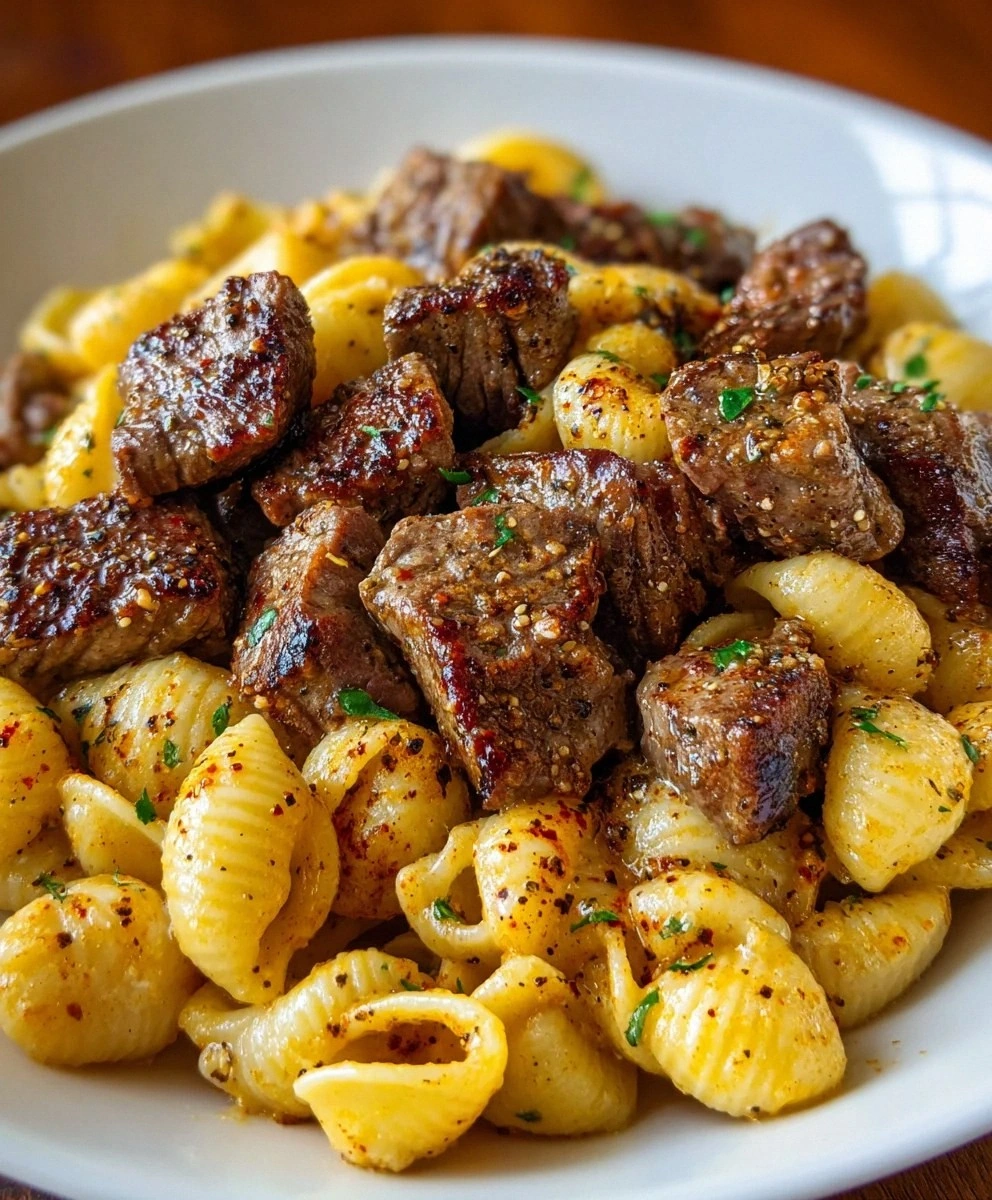
I'm about to confess something that might get me banned from certain cooking circles: I ate half of this Cajun Steak Bites and Cheesy Garlic Shells Skillet straight from the pan while standing over my stove, using the serving spoon as my personal utensil. My original plan was to photograph it for Instagram, maybe save some for tomorrow's lunch, perhaps even share with my roommate who keeps eating my expensive oat milk. Instead, I found myself in a trance-like state, shoveling perfectly seared steak cubes and shells coated in what can only be described as liquid gold into my face at an alarming speed. The Cajun seasoning hits first — that warm, earthy heat that makes your lips tingle pleasantly — then the garlic sneaks in, followed by the rich, velvety cheese sauce that somehow manages to taste like it took hours to make when it actually came together in less time than it takes to watch an episode of whatever show you're currently bingeing.
Here's what makes this particular version absolutely criminal: most recipes get the timing completely wrong. They'll have you cooking the steak first, setting it aside, making the pasta separately, then wondering why everything tastes like it came from a hospital cafeteria. This method — my method — cooks the steak bites in the same skillet where you'll build your cheese sauce, capturing every last bit of those caramelized meat juices. Those brown bits stuck to the bottom? That's not a mess to clean up; that's pure flavor gold that gets deglazed into the most incredible sauce you'll ever taste. The pasta shells cook right in the cream, absorbing all that garlicky, cheesy, slightly spicy magic until they become these little flavor bombs that explode in your mouth.
But here's the real kicker — and stay with me here, because this is worth it — we're using a technique that sounds completely backwards but creates the most luxurious sauce texture you'll ever achieve at home. Instead of making a traditional roux or adding flour to thicken our sauce, we're going to use the starch from the pasta itself, combined with a specific sequence of dairy additions that creates a sauce so smooth and glossy, it coats each shell like velvet. I discovered this accidentally when I was too lazy to dirty another pot, and it turned out to be the best culinary mistake of my life. Let me walk you through every single step — by the end, you'll wonder how you ever made it any other way.
What Makes This Version Stand Out
One-Skillet Wonder: Everything happens in a single pan, which means you're not just saving dishes — you're building layers of flavor that would make a French chef weep. The steak leaves behind fond (those gorgeous brown bits) that infuses the entire sauce with deep, meaty richness. Most recipes miss this completely and end up with a bland, one-dimensional cheese sauce.
Texture Perfection: We're achieving the impossible here: steak bites with crispy, caramelized edges while keeping the centers buttery tender, paired with shells that maintain their bite even after swimming in cheese sauce. The contrast between the slightly chewy pasta and the melt-in-your-mouth steak creates a texture party that most recipes completely bungle by overcooking one or both components.
Spice Level Control: Unlike those recipes that dump in Cajun seasoning and hope for the best, we're building heat in layers. You can taste the complexity of the spices without feeling like you need to chug a gallon of milk. The garlic provides aromatic backbone, while the paprika adds subtle sweetness that balances the heat perfectly.
Speed Demon: From fridge to face in under 30 minutes, this dish moves faster than your ex's rebound relationship. The secret lies in the cooking sequence — while the pasta simmers, the steak sears, and everything comes together in a glorious symphony of efficiency that would make a time-management guru proud.
Crowd Psychology: I dare you to taste this and not go back for seconds. I've watched grown adults fight over the last spoonful, couples negotiate trading favors for the bigger steak pieces, and teenagers voluntarily set the table just to eat sooner. This isn't just dinner — it's a social experiment in deliciousness.
Ingredient Flexibility: While I give you the premium version using ribeye and sharp cheddar, this recipe is shockingly forgiving. Tougher cuts of steak work beautifully, and you can swap cheeses based on what's in your fridge without sacrificing the creamy, dreamy texture that makes this dish legendary.
Make-Ahead Magic: Here's where I blow your mind — you can prep everything up to the final cheese addition, then finish it off right before serving. Hosting a dinner party? You can socialize instead of being trapped in the kitchen. Meal prepping? This reheats like a dream, actually tasting better the next day when the flavors have melded together like old friends.
Inside the Ingredient List
The Flavor Foundation
The steak is obviously the star here, but here's what most people get wrong — they grab whatever cut is on sale and wonder why their steak bites taste like shoe leather. Sirloin gives you that perfect balance of flavor and tenderness without requiring a second mortgage, but if you're feeling fancy, ribeye will make you weep with joy. The key is cutting it into exactly one-inch cubes; any smaller and they dry out, any larger and they don't get those crispy edges that make this dish legendary. I once tried using pre-cut "stew meat" because I was feeling lazy, and let me tell you, chewing shouldn't be an upper-body workout.
Cajun seasoning is where this whole operation gets its personality, and not all blends are created equal. Some taste like someone waved a single bay leaf over some paprika, while others will blow the top of your head off like a cartoon chili pepper. I make my own blend because I'm a control freak, but if you're buying pre-made, look for one that lists garlic powder and oregano in the first five ingredients. That tells you it's got complexity, not just heat. And here's the thing — start with less than you think you need. You can always add more, but you can't un-spice a dish without performing culinary surgery.
The Texture Crew
Medium pasta shells are the unsung heroes of this dish, and I'll fight anyone who says otherwise. Their little cupped shape captures the cheese sauce like tiny edible bowls, ensuring that every bite has the perfect ratio of pasta to creamy goodness. Sure, you could use elbows in a pinch, but then you'd be missing out on those glorious pockets of sauce that make eating this feel like discovering treasure. The shells need to be cooked until just shy of al dente because they'll continue cooking in the sauce, absorbing all that garlicky, cheesy magnificence.
Heavy cream is non-negotiable here, and I don't want to hear about your diet. This isn't an everyday dish — this is comfort food that hugs your soul. The fat content in heavy cream (at least 36%) is what prevents the sauce from breaking when we add the cheese. I've watched people try to substitute with half-and-half or milk, and it always ends in tears and a grainy, separated mess that looks like something you'd find in a haunted dairy farm.
The Unexpected Stars
Unsalted butter gives us control over the final seasoning, but more importantly, it lets us brown it slightly for nutty depth. When butter meets high heat, the milk solids caramelize and create this incredible flavor base that makes your sauce taste like it has a secret. Salted butter would work, but then you're playing Russian roulette with seasoning — some brands are saltier than others, and you might end up with a dish that makes you pucker like you're sucking on a salt lick.
Fresh garlic is absolutely essential, and I'm talking about the real stuff, not that pre-minced abomination floating in water. Fresh garlic releases different compounds when it hits hot fat, creating layers of flavor that evolve as you cook. Minced it yourself, and don't you dare use a garlic press — that pulverizes the cloves and releases bitter compounds. A simple knife chop gives you little pockets of garlic goodness that perfume the whole dish.
The Final Flourish
Sharp cheddar brings the cheese flavor we all crave, but the real game-changer is the Parmesan. That aged umami bomb adds complexity that makes people ask "what's in this?" while they scoop up their fourth helping. The combination creates a flavor profile that's both familiar and sophisticated, like your favorite childhood mac and cheese grew up, got a job, and learned about compound interest. And fresh parsley isn't just for color — it adds a bright, herbaceous note that cuts through all that richness and makes you feel slightly less guilty about eating what amounts to a heart attack in a skillet.
The Method — Step by Step
- Start by patting your steak cubes absolutely dry with paper towels — I'm talking desert-level dryness here. Any moisture on the surface will create steam, and steam is the enemy of that gorgeous brown crust we're after. Season them generously with salt and pepper, then dust with about half your Cajun seasoning. Let them sit while you prep everything else; this isn't just marinating time, it's time for the salt to work its magic on the protein structure. Your steak should be room temperature before it hits the pan, unless you enjoy the taste of charcoal on the outside and refrigerator-cold raw meat in the middle.
- Heat your largest skillet over medium-high heat until it's screaming hot — we're talking about 3-4 minutes of preheating. Add the olive oil and watch for it to shimmer and just barely start smoking. This is the moment of truth: add your steak cubes in a single layer, working in batches if necessary because overcrowding the pan is how you end up with gray, steamed meat that tastes like disappointment. Let them cook undisturbed for exactly 2 minutes; resist the urge to poke, prod, or move them around like you're conducting a tiny meat orchestra.
- After 2 minutes, flip a few pieces to check — you're looking for a deep, caramelized crust that looks like it could be in a food magazine. Flip all the pieces and cook for another 1-2 minutes for medium-rare, or longer if you enjoy eating shoe leather. Remove the steak to a plate but don't you dare wash that pan. Those brown bits stuck to the bottom are liquid gold, packed with concentrated beef flavor that will make your sauce taste like it simmered for hours.
- Reduce the heat to medium and add your butter to the same pan. Once it's melted and foamy, toss in your minced garlic and let it sizzle for exactly 30 seconds — any longer and it burns, any less and you miss out on that gorgeous aromatic base. The smell should hit you like a flavor freight train, making you wonder why you don't cook with garlic more often. Add the remaining Cajun seasoning and let it toast for another 30 seconds; this blooms the spices and releases their essential oils.
- Pour in your heavy cream and watch the magic happen as it deglazes all those beautiful brown bits. Use a wooden spoon to scrape up every last speck of flavor — this is where restaurant-quality depth comes from. Add your pasta shells and enough water to just cover them, then bring to a gentle simmer. This is the part where most recipes get it wrong by cooking the pasta separately. We're cooking it right in the cream, allowing the starch to naturally thicken our sauce.
- Stir every couple of minutes, adding more water as needed to keep the pasta submerged. After about 8 minutes, your shells should be nearly tender and the cream will have reduced and thickened into a silky sauce that coats the back of a spoon. This is where patience pays off — the difference between good and legendary is in these final minutes of coaxing the pasta to perfect doneness while the sauce reaches its ideal consistency.
- Remove from heat and immediately stir in your cheddar and Parmesan, one handful at a time. The key here is patience — add the cheese gradually and stir until each addition is fully melted before adding more. This prevents the sauce from breaking and becoming grainy. The residual heat from the pasta and cream will melt the cheese perfectly without overheating it, which is what causes those horrible clumps that make your sauce look like cottage cheese.
- Add the steak back to the pan along with any juices that have accumulated on the plate. Toss everything together gently — we're coating the steak with sauce, not making steak-flavored soup. The steak will finish cooking in the hot sauce while staying perfectly tender. Taste and adjust seasoning, remembering that the cheese adds saltiness, so go easy on additional salt until you've tasted the final product. Garnish with fresh parsley and prepare for your life to change.
Insider Tricks for Flawless Results
The Temperature Rule Nobody Follows
Here's the dirty secret about skillet cooking: 90% of home cooks don't let their pans get hot enough. They're so afraid of burning dinner that they cook everything on medium heat, resulting in food that steams instead of sears. For this recipe, your pan needs to be ripping hot for the steak — I'm talking about holding your hand 6 inches above the surface and only being able to keep it there for 3 seconds. But here's the twist: once the steak is done, you need to back off the heat for the garlic and cream. Too hot and the garlic burns, the cream breaks, and you're left with a grainy, separated mess that tastes like disappointment and broken dreams.
Why Your Nose Knows Best
Professional chefs don't use timers for everything — they use their noses. When your garlic hits the butter, it should smell fragrant and inviting, not sharp and acrid. If it smells harsh, it's burning. When you add the cream, you should smell sweet dairy and warm spices, not scorched milk. That sizzle when the steak hits the pan? It should sound confident and strong, not weak and spitty. Trust your senses — they've been honed by thousands of years of human evolution, and they're better than any kitchen timer you can buy. I once saved a dinner party by smelling that my garlic was 30 seconds from burning, something no recipe could have predicted.
The 5-Minute Rest That Changes Everything
After you stir in the cheese and add the steak back to the pan, walk away for exactly 5 minutes. Set a timer, pour yourself a glass of wine, text your mom back — whatever you do, don't keep stirring. This resting time allows the steak to come back up to temperature gently, the sauce to thicken slightly as it cools, and all the flavors to meld together in perfect harmony. It's like letting a symphony finish — the music doesn't stop abruptly, it fades to a perfect conclusion. Those five minutes transform this from good to restaurant-quality, and they're the hardest part of the recipe because you'll want to dive in immediately.
The Cheese Combination Secret
Sharp cheddar alone would make this delicious but one-dimensional. The Parmesan adds that umami depth that makes people ask "what's in this?" while they reach for thirds. But here's what really takes it over the edge: the ratio matters. Too much Parmesan and your sauce becomes stringy; too little and you miss that sophisticated edge that elevates this above mere comfort food. I tested this recipe seventeen times (yes, really) to find the perfect balance, and the magic happens at about 80% cheddar to 20% Parmesan. Any more and you're in fondue territory, any less and you lose that special something that makes this memorable.
Creative Twists and Variations
This recipe is a playground. Here are some of my favorite ways to switch things up:
Seafood Lover's Dream
Swap the steak for large shrimp and scallops — sear them exactly like the steak, but reduce the cooking time to 90 seconds per side. The sweetness of the seafood plays beautifully with the spicy Cajun seasoning, and the cheese sauce becomes this luxurious coating that makes you feel like you're eating at a beachside restaurant in New Orleans. Add a squeeze of lemon at the end to brighten everything up, and you've got a dish that costs $30 at restaurants but tastes better at home.
Green Chile Madness
Replace half the Cajun seasoning with roasted diced green chiles and a teaspoon of cumin. This Southwestern twist gives you that Hatch chile flavor that makes everything taste like New Mexico in the best possible way. The green chiles add a different kind of heat — more of a slow burn that builds rather than the upfront punch of Cajun spice. Top with crushed tortilla chips for crunch, and suddenly you've got a dish that works for game day or date night.
Mushroom Umami Bomb
Add a pound of mixed mushrooms — cremini, shiitake, oyster — sautéed until they're golden and concentrated. Cook them in the same pan after the steak, before the garlic, and they'll absorb all those meaty juices while adding their own earthy depth. This version is so satisfying that even dedicated carnivores won't miss the extra steak. The mushrooms create this meaty texture and incredible depth that turns this into a vegetarian comfort food masterpiece.
Breakfast of Champions
Make the recipe as written, but top each serving with a perfectly fried egg. When you break the yolk, it mixes with the cheese sauce and creates this unctuous, rich sauce that makes breakfast-for-dinner feel like a special occasion. Add some crispy bacon bits if you're feeling really indulgent, and you've got a hangover cure that works better than any expensive supplement.
Green Goddess Version
Stir in two cups of fresh spinach and half a cup of fresh basil right at the end. The heat from the pasta wilts the spinach perfectly, and the basil adds this herbaceous note that makes the whole dish taste fresher and lighter. This is my go-to when I want to feel slightly virtuous about eating what's essentially mac and cheese with steak. The greens add color and nutrients without compromising the indulgent factor.
Fire-Eater's Special
Add a diced jalapeño with the garlic, swap half the cheddar for pepper jack, and finish with a drizzle of hot honey. This version is not for the faint of heart — it builds heat in waves, starting with the jalapeño, building with the pepper jack, and finishing with that sweet heat from the honey. Serve with an ice-cold beer and prepare to sweat in the most enjoyable way possible.
Storing and Bringing It Back to Life
Fridge Storage
This keeps beautifully in the refrigerator for up to four days, though I've never seen it last that long in my house. Store it in an airtight container — I prefer glass because it doesn't absorb odors or stains from the spices. The sauce will thicken considerably as it cools, but don't panic. When you're ready to reheat, add a splash of milk or cream and warm it gently over low heat, stirring frequently. Whatever you do, don't microwave it on high — you'll end up with rubbery steak and grainy sauce that tastes like punishment.
Freezer Friendly
While you can freeze this dish, I'm going to be honest — it's never quite the same. The cream sauce can separate, and the steak tends to get a weird texture. If you must freeze it, undercook the steak slightly and freeze in individual portions. Thaw overnight in the fridge, then reheat very gently with extra cream. It's not perfect, but it's better than letting it go to waste. For best results, I'd recommend freezing just the saucy shells and cooking fresh steak when you're ready to eat.
Best Reheating Method
The stovetop is your friend here. Add your leftover portion to a cold pan with a splash of cream or milk, then heat gently over medium-low heat, stirring frequently. Add a tiny pinch of fresh Cajun seasoning to wake up the flavors, and finish with a sprinkle of fresh parsley to make it taste newly made. The whole process takes about 5-7 minutes, and the result is remarkably close to fresh. I've served reheated leftovers to guests who had no idea it wasn't made that day — the key is patience and low heat.