Picture this: it’s a rainy Saturday afternoon, the kind that makes you want to curl up with a blanket and a slice of something sweet that feels like sunshine in a bite. I was standing in my kitchen, half‑heartedly scrolling through endless cake recipes, when my roommate burst in shouting, “I dare you to make a lemon cake that actually tastes like a summer picnic!” I laughed, grabbed a bowl, and thought, “Challenge accepted.” The result? A Lemon Blueberry Layer Cake that turned my modest kitchen into a fragrant orchard, and honestly, I ate half the batch before anyone else could even peek at the oven.
The moment the batter hit the whisk, the kitchen filled with a zingy citrus perfume that made the rain outside seem like a distant memory. The blueberries, whether fresh or frozen, burst like tiny fireworks, releasing sweet juices that mingled with the lemon zest, creating a scent that was both bright and comforting. You could hear the gentle hum of the mixer, feel the smooth, glossy batter slide off the spoon, and see the pale yellow hue flecked with deep‑blue specks – a visual promise of the flavor explosion to come. When the cake finally rose, the edges pulled away from the pan with a crispness that reminded me of the satisfying snap of a fresh apple.
Most lemon‑blueberry cakes I’ve tried either end up dry, overly sweet, or suffer from a soggy crumb that collapses under its own weight. This version, however, uses a clever combination of Greek yogurt, buttermilk, and melted coconut oil that keeps every layer moist, tender, and just the right amount of fluffy. The secret weapon? A dollop of blueberry jam sandwiched between the layers that adds a glossy, tangy surprise without turning the cake into a soggy mess. Trust me, this is hands down the best version you’ll ever make at home, and I’m about to spill every detail.
Okay, ready for the game‑changer? I’m going to walk you through every single step — from choosing the perfect lemons to the final frosting swirl. By the end, you’ll wonder how you ever settled for a bland store‑bought slice. I dare you to taste this and not go back for seconds.
What Makes This Version Stand Out
- Flavor Fusion: The bright citrus from fresh lemon juice and zest meets the deep, berry‑rich jam, creating a balanced sweet‑tart profile that dances on the palate. It’s like a summer sunrise in every forkful.
- Moisture Mastery: Greek yogurt and buttermilk work together to keep the crumb ultra‑tender, while melted coconut oil adds a subtle richness without the heaviness of butter.
- Simplicity Meets Sophistication: Only pantry staples and a few fresh ingredients are needed, yet the result feels like it belongs in a five‑star patisserie.
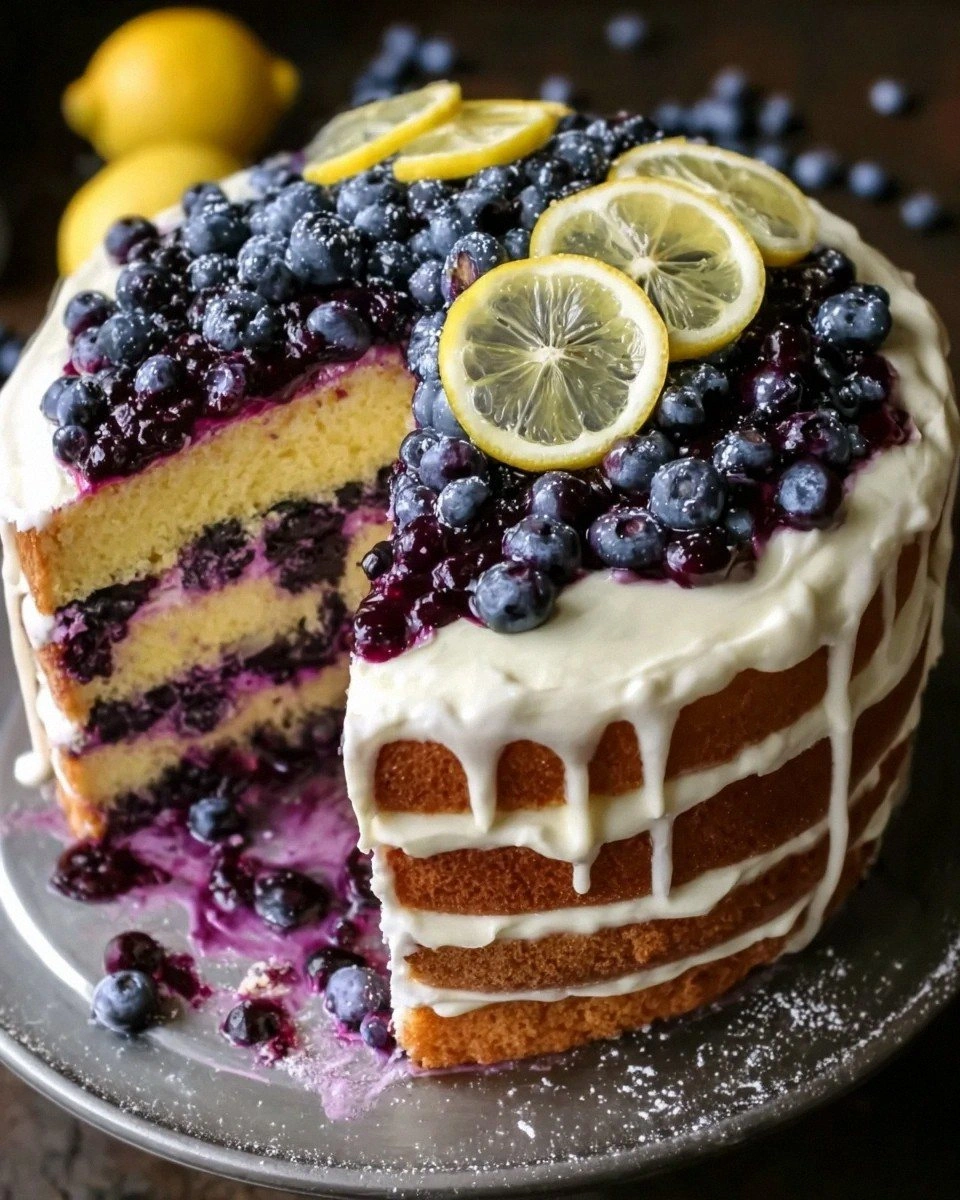
- Visual Wow Factor: The layers are a gorgeous gradient of pale yellow and deep blueberry, finished with a glossy jam glaze that makes the cake Instagram‑ready without any extra effort.
- Crowd‑Pleaser: Whether you’re serving brunch, a birthday, or a casual tea, this cake earns rave reviews—people often ask for the recipe before the first slice is even cut.
- Make‑Ahead Magic: The cake can be assembled a day ahead, and the frosting actually improves as the flavors meld, meaning less stress on the day of your event.
- Ingredient Quality: Using high‑quality blueberry jam and real lemon zest (not the pre‑ground stuff) makes a world of difference in depth of flavor.
- Cooking Method: Baking at a moderate temperature ensures even rise and prevents the dreaded dry top, while the gentle cooling technique preserves the crumb’s softness.
Inside the Ingredient List
The Flavor Base
Fresh lemon juice: This brightens the flavor and adds a zesty tang that cuts through the sweetness of the jam. If you skip it, the cake will taste flat and miss that signature citrus snap. A good rule of thumb is to use juice from lemons that feel heavy for their size – they’re juicier.
Finely grated lemon zest: The zest carries the essential oils that give the lemon its aromatic punch. Don’t use pre‑grated zest from a jar; it’s often dried and lacks the volatile oils. If you’re in a pinch, a microplane works wonders, and you’ll get a burst of fragrance that’s impossible to replicate otherwise.
The Texture Crew
Plain Greek yogurt: Moistens the cake while boosting protein content, creating a tender crumb that doesn’t crumble apart. Skipping yogurt for regular yogurt can make the batter too runny, while sour cream can make it too dense.
Buttermilk: Its acidity reacts with the baking soda, giving the cake a light, airy lift. If you don’t have buttermilk, add 1 tablespoon of lemon juice to a cup of milk and let it sit for five minutes – the same magic.
Melted coconut oil (or butter/canola oil): Keeps the cake moist and adds a subtle richness. Coconut oil adds a faint tropical note that pairs surprisingly well with lemon, but feel free to swap for butter if you prefer a classic buttery flavor.
The Unexpected Star
High‑quality blueberry jam: This isn’t just a sweet spread; it’s the glue that holds the layers together while delivering a burst of berry intensity. If you use a low‑sugar jam, the cake can become soggy; the right jam sets nicely after cooling.
Fresh or frozen blueberries: Bursting with flavor; don’t worry if they’re frozen! No need to thaw – they’ll stay intact and prevent the batter from turning purple. Toss them in a little flour before folding in to keep them from sinking.
The Final Flourish
All‑purpose flour: The backbone of your cake; provides the necessary structure. Over‑mixing can develop gluten, making the cake tough, so combine just until the flour disappears.
Baking powder and baking soda: Leavening agents that give the cake its lift. The soda reacts with the buttermilk and lemon juice, while the powder adds extra rise – a dynamic duo.
Kosher salt: Balances sweetness and enhances the flavors. A pinch too little and the cake can taste bland; a pinch too much and it becomes briny.
Everything's prepped? Good. Let's get into the real action...
The Method — Step by Step
Preheat your oven to 350°F (175°C). Grease two 9‑inch round cake pans with a thin layer of coconut oil, then line the bottoms with parchment paper. This double‑layered approach ensures the cakes release cleanly and prevents any dreaded sticking. While the oven heats, give the pans a quick tap to settle the oil – you’ll hear a faint sizzle that signals readiness.
In a large bowl, whisk together the granulated sugar, packed brown sugar, and the melted coconut oil until the mixture looks glossy and slightly thickened. This step is crucial because it dissolves the sugars and creates an emulsion that will trap air later on. I dare you to watch the mixture turn from grainy to silky; that’s the foundation of a fluffy crumb.
Crack the three large eggs into the bowl, adding them one at a time, beating after each until fully incorporated. Then stir in the vanilla extract, fresh lemon juice, and lemon zest. You’ll notice the batter brightening in color; that’s the citrus doing its work. Let the mixture sit for two minutes – this allows the acids to start reacting with the baking soda later.
In a separate bowl, sift together the all‑purpose flour, baking powder, baking soda, and kosher salt. Sifting aerates the flour and prevents lumps, which is essential for that light, airy texture. Once combined, gently fold the dry ingredients into the wet mixture using a spatula, turning the bowl over a few times. Stop mixing the moment you no longer see streaks of flour; over‑mixing will develop gluten and make the cake tough.
Gently fold in the fresh or frozen blueberries, making sure they’re evenly distributed without crushing them. The batter should look speckled with deep‑blue islands. Spoon the batter evenly into the prepared pans, smoothing the tops with a spatula. The batter will spread a bit; that’s normal – the pans will level out as they bake.
Slide the pans into the oven and bake for 25‑30 minutes, or until a toothpick inserted into the center comes out with just a few moist crumbs. Around the 20‑minute mark, rotate the pans 180 degrees to ensure even browning – the oven’s hot spots love a good spin. You’ll hear a faint crackle as the edges start pulling away from the pan, a sure sign that the crust is forming.
While the cakes are cooling, prepare the frosting. In a mixing bowl, beat the salted butter until creamy, then add the mascarpone (or cream cheese) and continue beating until the mixture is light and fluffy. Gradually add the powdered sugar, one cup at a time, beating on low speed to avoid a sugar cloud. Finish with a splash of vanilla extract and a pinch of salt. The frosting should be smooth enough to spread without tearing the cake layers.
Once the cakes have cooled in the pans for 10 minutes, run a thin knife around the edges, flip them onto a wire rack, and peel off the parchment. Allow the cakes to cool completely – this prevents the frosting from melting when you spread it. Place one layer on a serving plate, spread a generous dollop of blueberry jam, then top with the second layer. Frost the top and sides with the mascarpone buttercream, using an offset spatula for a sleek finish. For an extra pop, drizzle a thin ribbon of jam over the top and garnish with a few fresh blueberries and a zesty lemon curl.
That's it — you did it. But hold on, I've got a few more tricks that'll take this to another level...
Insider Tricks for Flawless Results
The Temperature Rule Nobody Follows
Never bake a cake straight from the fridge. Let the batter sit at room temperature for at least 15 minutes before you pour it into the pans. This ensures the leavening agents react evenly, giving you a uniform rise. A friend once tried to skip this step and ended up with a dense, uneven crumb – let’s just say the look on his face was priceless.
Why Your Nose Knows Best
Trust the aroma. When the cake is about 20 minutes into baking, you should start smelling a sweet citrus perfume mixed with a faint buttery note. If you don’t detect that scent, the oven might be running cooler than it says, and you’ll need to add a couple of minutes. Your nose is a better thermometer than any gadget.
The 5‑Minute Rest That Changes Everything
After removing the cakes from the oven, let them rest in the pans for exactly five minutes before turning them out. This short pause lets the steam finish the cooking process gently, preventing the middle from collapsing. Skipping this step can lead to a soggy bottom that ruins the whole structure.
Frosting Consistency Cheat
If your frosting looks too runny, add a tablespoon of powdered sugar at a time until it reaches a spreadable yet firm consistency. Conversely, if it’s too stiff, whisk in a teaspoon of buttermilk or heavy cream. This balance is the secret to a frosting that holds its shape but still melts in your mouth.
Layer Alignment Pro
Use a thin piece of parchment paper as a guide on top of the first layer before adding jam and the second layer. This ensures the layers are perfectly level, making the final cake look bakery‑professional. A crooked cake is still delicious, but why settle for less?
Creative Twists and Variations
This recipe is a playground. Here are some of my favorite ways to switch things up:
Berry Medley Madness
Swap half the blueberries for raspberries or blackberries. The tartness of raspberries adds a new dimension, while blackberries give a richer, earthier note. This variation is perfect for a brunch where you want a burst of color on the plate.
Lemon‑Lavender Dream
Infuse the butter for the frosting with dried culinary lavender buds (about a teaspoon) and add a splash of lavender‑infused simple syrup to the batter. The floral undertone pairs beautifully with the citrus, creating a sophisticated flavor profile that’s ideal for a garden party.
Chocolate‑Covered Delight
Stir ¼ cup of melted dark chocolate into the frosting for a chocolate‑lemon swirl. You can also drizzle a thin river of melted chocolate over the top and sprinkle toasted almond slivers. This version satisfies both chocolate lovers and citrus fans.
Vegan Velvet
Replace the Greek yogurt with coconut yogurt, the butter with vegan margarine, and the mascarpone with a blend of silken tofu and powdered sugar. Use a plant‑based oil instead of coconut oil if you prefer a neutral flavor. The result is just as moist, and it’s perfect for anyone avoiding dairy.
Spiced Autumn Twist
Add a pinch of ground cinnamon and a dash of nutmeg to the dry ingredients, and swap the blueberry jam for a fig or apricot preserve. This creates a warm, cozy cake that’s perfect for a chilly evening.
Mini Cake Pops
After the cake cools, crumble it and mix with a little extra frosting, then roll into bite‑size balls. Insert a lollipop stick, dip in melted white chocolate, and drizzle with lemon zest‑infused ganache. These make adorable party favors that look as good as they taste.
Storing and Bringing It Back to Life
Fridge Storage
Cover the cake loosely with a dome or an airtight container and store it in the refrigerator for up to four days. The frosting will firm up a bit, but the cake stays moist thanks to the yogurt and buttermilk. Before serving, let it sit at room temperature for 20‑30 minutes; this restores the soft, creamy texture.
Freezer Friendly
Wrap each layer separately in plastic wrap, then place them in a freezer‑safe bag. The cake will keep for up to three months. When you’re ready to enjoy it, thaw overnight in the fridge, then bring to room temperature and add a fresh swirl of frosting if needed.
Best Reheating Method
To revive a slice, preheat your oven to 300°F (150°C), place the slice on a baking sheet, and lightly brush the top with a tiny splash of water. This creates steam that revives the crumb without drying it out. In just five minutes, you’ll have a slice that tastes as fresh as the day it was baked.