I was standing in my tiny kitchen, the kind of kitchen that feels like a cramped airplane galley, when my roommate shouted, “You’ve got to try something new with those over‑ripe bananas!” I stared at the brown speckles on the bananas and thought, why not turn this disaster into a tropical masterpiece? The idea was simple, the execution was a glorious mess of butter, sugar, and a daring splash of pineapple juice that threatened to soak the whole pan. I grabbed a can of crushed pineapple, a bag of shredded coconut, and a couple of bananas that were practically melting, and I set out to create what I now call the ultimate comfort‑food crossover. I’ll be honest — I ate half the batch before anyone else got a chance to try it, and that was the best mistake of my culinary career.
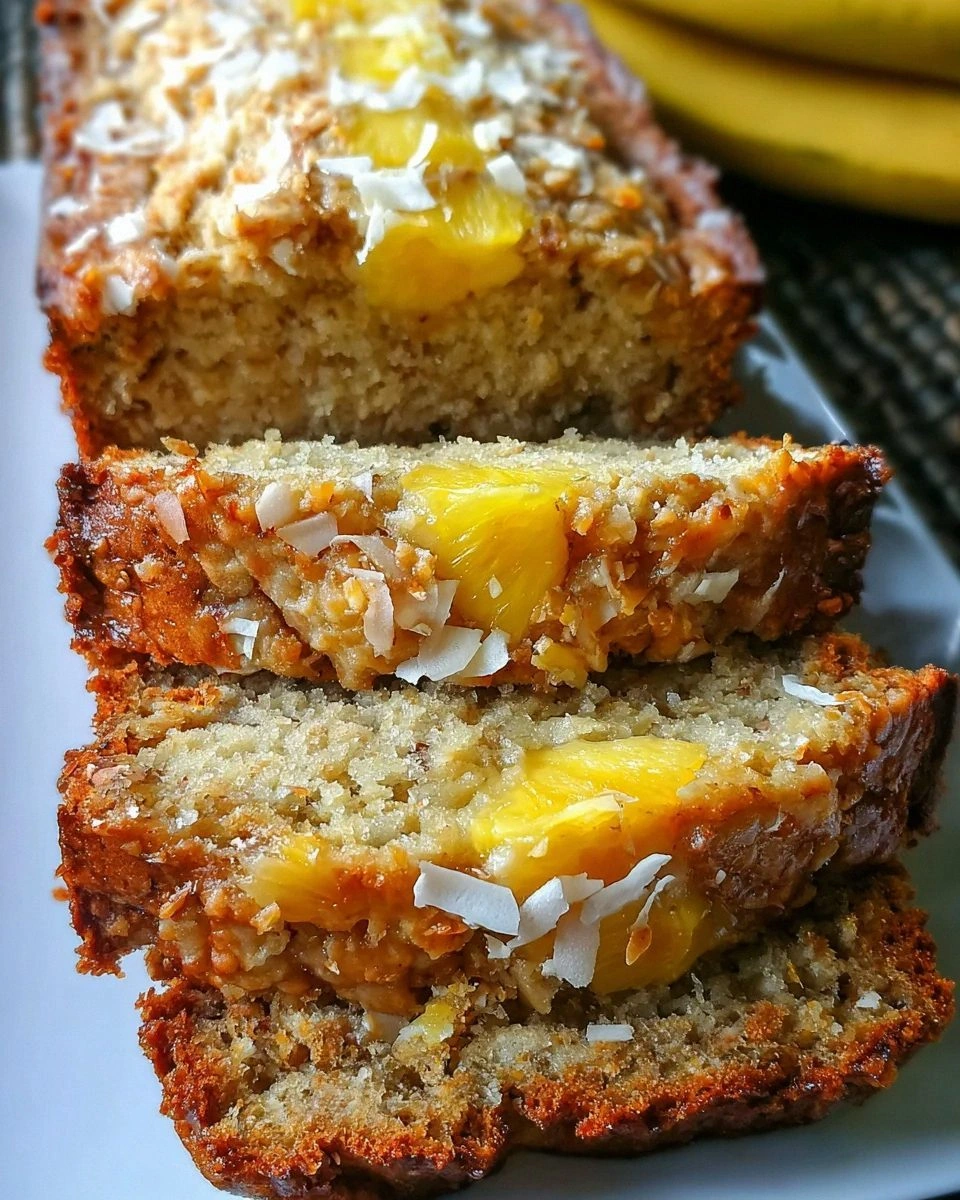
Picture this: the oven humming like a low‑frequency drum, the batter swirling in the bowl like a miniature tropical storm, the aroma of caramelized butter and toasted coconut blooming and filling every corner of the apartment. The scent is a head‑on collision of sweet banana, bright pineapple, and a faint whisper of toasted coconut that makes your nose do a little happy dance. When the bread finally emerges, the crust is a golden‑brown crown that cracks just enough to reveal a tender, moist interior studded with juicy pineapple chunks that burst like fireworks with every bite. The texture is a perfect marriage of banana‑soft crumb and coconut‑chewy chew, and the flavor? It’s a vacation for your palate that you can’t get on a plane.
What makes this version stand out from the sea of banana‑bread variations is the daring addition of undrained crushed pineapple. Most recipes shy away from the extra moisture, fearing a soggy disaster, but I discovered that the pineapple’s natural acidity actually helps the gluten relax, giving the crumb a feather‑light lift. The shredded coconut isn’t just a garnish; it’s a texture hero that adds a subtle crunch and a buttery, nutty finish that lingers on the tongue. I also use a precise balance of baking powder and soda to coax the batter into a lofty rise, while the butter, softened to a perfect spreadable consistency, ensures every bite is rich without being greasy. And let’s not forget the secret weapon: a pinch of salt that amplifies every sweet note like a maestro conducting a symphony.
You might wonder why I chose pineapple over, say, blueberries or chocolate chips. The answer is simple: pineapple brings a bright, acidic pop that cuts through the sweetness, while the banana provides a mellow, caramel‑like base. This contrast is what makes the bread sing, and the coconut adds that tropical vibe that transports you straight to a beachside shack. I’m about to walk you through every single step — by the end, you’ll wonder how you ever made banana bread any other way. Okay, ready for the game‑changer?
What Makes This Version Stand Out
- Taste Explosion: The sweet banana meets tangy pineapple, creating a flavor duet that feels like a sunrise in your mouth.
- Texture Symphony: Moist crumb, juicy pineapple pockets, and chewy coconut combine for a multi‑layered mouthfeel.
- Simplicity Meets Sophistication: Only ten ingredients, yet the result feels like a bakery‑level treat.
- Unique Moisture Balance: Undrained pineapple adds liquid without making the loaf soggy, thanks to the right leavening ratio.
- Crowd‑Pleaser: Even the pickiest eaters admit they can’t resist the tropical aroma wafting from the oven.
- Ingredient Quality: Using ripe bananas and fresh‑cut pineapple ensures natural sweetness without extra sugar.
- One‑Pan Wonder: No need for a separate glaze or frosting; the bread is perfect on its own.
- Make‑Ahead Magic: It freezes beautifully, letting you enjoy a slice whenever the tropical cravings hit.
Inside the Ingredient List
The Flavor Base
Butter is the foundation of any good quick bread, and in this recipe I use a half‑cup of softened butter. When butter is softened to room temperature, its fat molecules are more pliable, allowing them to coat the sugar crystals evenly. This coating prevents the sugar from crystallizing too aggressively, which would otherwise create a grainy texture. If you skip the butter or use melted butter, you’ll end up with a denser, less tender crumb that feels more like a cake than a loaf. For the best flavor, choose unsalted butter and add a pinch of sea salt later to enhance the overall taste.
The Sweeteners
Granulated sugar does more than just sweeten; it also contributes to the Maillard reaction, giving the crust that beautiful golden hue. I use one cup of sugar, which balances the natural sweetness of the bananas and pineapple without turning the loaf cloyingly sweet. If you prefer a deeper caramel note, you can swap half the white sugar for brown sugar, but remember that brown sugar adds moisture, so you may need to reduce the pineapple liquid slightly. The key is to keep the sugar ratio balanced so the pineapple’s acidity doesn’t get overwhelmed.
The Texture Crew
Ripe bananas are the heart of this bread. I recommend using at least two large bananas that are speckled brown and soft to the touch. The bananas provide natural sweetness, moisture, and a subtle fruity aroma that pairs perfectly with pineapple. If you use under‑ripe bananas, the loaf will be bland and may not rise properly because the starches haven’t fully converted to sugars. For a vegan twist, mash two ripe plant‑based bananas and replace each egg with a “flax egg” (1 tbsp ground flax + 3 tbsp water).
Crushed pineapple, undrained, is the secret weapon. The juice adds a bright, acidic note that lifts the flavor, while the fruit pieces create pockets of juicy surprise. Because the pineapple is undrained, you get extra moisture, which is compensated by the leavening agents and the flour’s ability to absorb liquid. If you’re concerned about excess liquid, you can lightly pat the pineapple with a paper towel, but I’d rather keep the juice in for that extra zing.
The Unexpected Star
Shredded coconut brings a chewy, toasted finish that makes each bite feel like a tropical vacation. The coconut’s natural oils also add a subtle richness that complements the butter. Toast the coconut lightly in a dry skillet for 3‑4 minutes before folding it in, and you’ll hear a faint “crackle” that signals it’s ready. If you’re allergic or simply don’t like coconut, you can swap it for chopped macadamia nuts for a similarly crunchy texture.
The Final Flourish
All‑purpose flour provides the structural backbone. I use two cups, which is enough to absorb the extra liquid from the pineapple while still allowing the bread to rise. The combination of 1 tsp baking powder and ½ tsp baking soda gives a balanced rise; the powder creates a gentle lift, while the soda reacts with the pineapple’s acidity for a quick burst of lift early in the bake. Salt, just a pinch (about ¼ tsp), is essential; it amplifies the sweet and savory notes and prevents the flavor from becoming one‑dimensional.
Everything's prepped? Good. Let's get into the real action…
The Method — Step by Step
Preheat your oven to 350°F (175°C) and grease a 9‑x‑5‑inch loaf pan with a thin layer of butter, then dust it lightly with flour. This creates a non‑stick barrier that also adds a subtle crust. While the oven warms, place a rack in the middle position so heat circulates evenly. I dare you to taste this and not go back for seconds once it’s baked.
In a large mixing bowl, combine the softened butter and granulated sugar. Using an electric mixer on medium speed, beat them together for about two minutes until the mixture turns pale and fluffy. This is the moment of truth: the batter should look like a cloud ready to burst.
Kitchen Hack: Scrape the sides of the bowl with a silicone spatula halfway through mixing to ensure every speck of butter is incorporated.Add the eggs one at a time, beating well after each addition. The batter should become glossy and slightly thickened. Then, mash the ripe bananas with a fork until they’re almost puree, and fold them into the butter‑sugar mixture. The banana’s aroma will start to mingle with the butter, creating a scent that’s both comforting and exotic.
Stir in the crushed pineapple, including its juice. You’ll notice the batter loosening a bit — that’s perfectly normal. The pineapple’s acidity will react with the baking soda later, giving the loaf a subtle lift.
Watch Out: If you over‑mix at this stage, gluten will develop and the crumb could become tough. Mix just until everything is combined.In a separate bowl, whisk together the flour, baking powder, baking soda, and salt. This dry mix ensures the leavening agents are evenly distributed, preventing pockets of soda that could create bitter spots. Once combined, gently fold the dry ingredients into the wet batter using a rubber spatula. The batter will look slightly lumpy; resist the urge to over‑smooth it — those lumps turn into pockets of tender crumb.
Finally, fold in the shredded coconut and give the batter one last gentle stir. The coconut should be evenly speckled throughout, creating a visual promise of the chew you’ll experience later. If you toasted the coconut earlier, you’ll also notice a faint nutty aroma that adds depth. At this point, the batter should have a thick but pourable consistency, almost like a thick pancake batter.
Pour the batter into the prepared loaf pan, smoothing the top with the back of a spoon. Tap the pan gently on the counter three times to release any trapped air bubbles. The surface should be slightly domed; as it bakes, the top will flatten and develop a golden crust.
Kitchen Hack: Sprinkle a handful of extra shredded coconut on the very top before baking for an extra crunchy crown.Slide the pan into the preheated oven and bake for 30‑35 minutes, or until a toothpick inserted into the center comes out clean or with just a few moist crumbs. Around the 20‑minute mark, rotate the pan 180 degrees to ensure even browning. You’ll hear a faint “sizzle” as the edges start to pull away from the pan — that’s the sign the crust is forming. Keep a close eye; over‑baking will dry out the pineapple pockets.
Remove the loaf from the oven and let it cool in the pan for 10 minutes. Then, run a thin knife around the edges, invert the pan, and gently lift the bread onto a wire rack. The cooling process allows the steam to redistribute, keeping the interior moist. While it cools, the aroma will intensify, making your kitchen smell like a tropical bakery. That moment when the first slice pulls away and you see the golden crust? Pure magic.
That's it — you did it. But hold on, I've got a few more tricks that'll take this to another level...
Insider Tricks for Flawless Results
The Temperature Rule Nobody Follows
Most home bakers preheat their oven to 350°F and forget to consider the ambient temperature of the kitchen. If your kitchen is warm, the oven can actually be a few degrees hotter, leading to a crust that forms too quickly and a gummy interior. I always place an oven thermometer on the middle rack and adjust the dial by -5°F if the reading is above 355°F. This tiny tweak ensures the loaf rises evenly and the pineapple juices stay locked inside, giving you that perfect moist crumb.
Why Your Nose Knows Best
Your nose is a more reliable timer than any clock when it comes to baked goods. When the bread is about 5 minutes from being done, you’ll notice a fragrant, almost caramel‑like scent wafting from the oven. If you smell a sharp, acidic pineapple note, the bread likely needs a couple more minutes; if you smell a deep, buttery aroma, it’s time to pull it out. Trust that instinct — it’s why I never overbake my banana breads.
The 5‑Minute Rest That Changes Everything
After the loaf cools on the rack, let it sit untouched for an additional five minutes before slicing. This brief rest allows the steam inside to settle, preventing the crumb from collapsing and the pineapple juices from seeping out onto the cutting board. I once sliced immediately and ended up with a gummy mess; now I always honor the five‑minute rule, and the slices stay clean and firm.
The Coconut Toast Trick
If you love an extra crunch, toast the shredded coconut in a dry skillet over medium heat for 3‑4 minutes, stirring constantly. You’ll hear a gentle crackle and see the edges turn a light amber. This step adds a toasty flavor that contrasts beautifully with the sweet pineapple.
The Banana Mash Consistency Secret
When mashing bananas, aim for a texture that’s almost liquid but still holds some tiny flecks. Over‑mashing turns the banana into a puree, which can make the crumb too wet. Under‑mashing leaves large chunks that create uneven pockets. Use a fork, mash, then finish with a quick whisk to achieve the perfect consistency. This balance ensures the banana flavor is distributed evenly without compromising structure.
Creative Twists and Variations
This recipe is a playground. Here are some of my favorite ways to switch things up:
Coconut Lime Zest
Add the zest of one lime and a tablespoon of lime juice to the batter for a bright, citrusy punch that pairs beautifully with the pineapple. The lime’s acidity amplifies the tropical vibe and makes the loaf feel even more refreshing.
Chocolate Chip Surprise
Fold in ½ cup of dark chocolate chips after adding the coconut. The bittersweet chocolate contrasts the sweet fruit, creating a sophisticated flavor that will win over chocolate lovers.
Nutty Crunch
Swap half of the shredded coconut for toasted macadamia nuts or pecans. The nuts add a buttery crunch that complements the chewiness of the coconut and adds a layer of richness.
Spiced Holiday Edition
Add ½ tsp ground cinnamon, ¼ tsp nutmeg, and a pinch of cloves to the dry ingredients. This spice blend turns the loaf into a festive treat that’s perfect for holiday brunches.
Vegan Coconut Pineapple Bread
Replace the butter with coconut oil, the eggs with flax “eggs” (1 tbsp ground flax + 3 tbsp water per egg), and use plant‑based milk (just a splash to adjust consistency). The result is a dairy‑free, egg‑free version that still boasts that tropical flavor.
Storing and Bringing It Back to Life
Fridge Storage
Wrap the cooled loaf tightly in plastic wrap or store it in an airtight container. It will stay fresh for up to five days in the refrigerator. The cool environment keeps the coconut from going rancid and preserves the pineapple’s moisture.
Freezer Friendly
Slice the loaf into 1‑inch thick pieces, place a piece of parchment between each slice, and freeze them in a zip‑top bag. They’ll keep for up to three months. When you’re ready to enjoy, pop a slice in the toaster or microwave for 20‑30 seconds.
Best Reheating Method
To revive a refrigerated slice, preheat a skillet over low heat, add a tiny splash of water (just a teaspoon), and cover with a lid for 2‑3 minutes. The steam will re‑hydrate the crumb, and the crust will regain its slight crispness. If you prefer the oven, warm the whole loaf at 300°F for 10‑12 minutes, again adding a teaspoon of water to the pan for steam.