I burned the pine nuts. Not once, not twice, but three times in a row while trying to nail this Catalan classic, and you know what? The fourth attempt changed everything. The kitchen smelled like a Barcelona side-street at dusk, all sizzling garlic and toasty nuts, and I finally understood why my friend's Catalan grandmother guarded this recipe like family treasure. This isn't just another spinach side dish that wilts into sad, gray submission. No, this is the version that makes card-carrying carnivores steal forkfuls straight from the pan, the one that turns a bag of humble leaves into something that tastes like it came from a sun-drenched terrace overlooking the Mediterranean.
Picture this: it's 7:30 p.m., your stomach is staging a protest, and you've got exactly fifteen minutes before hanger turns you into someone nobody wants to dine with. Most people would reach for takeout menus or sad frozen pizza. But you? You're about to transform a mountain of raw spinach, a handful of pine nuts, and a few pantry staples into a dish that will make you feel like you have your life together, even if your laundry is currently staging a coup in the hallway. The magic happens in one pan, the flavors build faster than you can say "Bon profit," and the result is so ridiculously good that you'll find yourself making it twice a week.
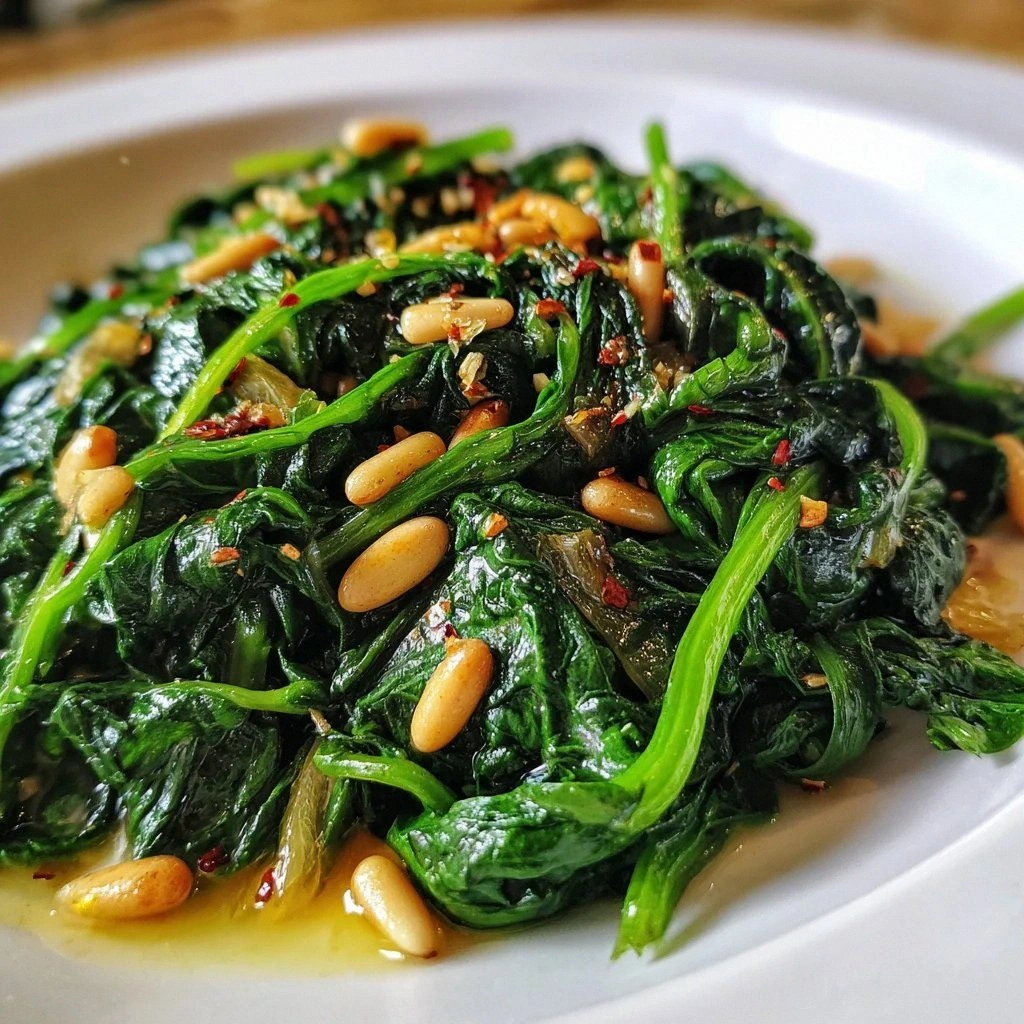
What makes this version different from every other spinach sauté on the internet? We're not just wilting leaves and calling it a day. We're building layers — toasting pine nuts until they're golden and fragrant, letting garlic slices turn sweet and jammy in olive oil that's practically liquid sunshine, and finishing with a bright splash of lemon that makes the whole dish sing. The texture is anything but one-note: tender spinach, crunchy nuts, and those little garlic chips that crisp around the edges like savory candy. I dare you to taste this and not go back for seconds.
Stay with me here — this is worth it. By the time you finish reading, you'll understand exactly why Catalan families have been making this for centuries, why it works as a quick weeknight side or a stunning vegetarian main, and why you'll never look at spinach the same way again. Let me walk you through every single step — by the end, you'll wonder how you ever made it any other way.
What Makes This Version Stand Out
Every food blogger and their cousin has a spinach sauté recipe, but this one? This one actually understands what makes Catalan cuisine so addictive. It's not about throwing everything in a pan and hoping for the best. It's about understanding that olive oil isn't just a cooking medium — it's a flavor delivery system. It's knowing that garlic can be your best friend or your worst enemy depending on how you treat it. And it's realizing that sometimes the simplest dishes require the most respect.
- Lightning Fast: From fridge to table in under ten minutes, this dish moves at the speed of your hunger. While your rice simmers or your chicken rests, you're building a side dish that tastes like it took hours of careful attention.
- Pantry Perfect: No specialty store runs required. Everything lives in your kitchen right now, waiting to become something spectacular. Even the pine nuts keep for months in the freezer.
- Flavor Bomb: Most recipes get this completely wrong — they either undercook the garlic (raw garlic bite, anyone?) or cremate it into bitter sadness. We hit that sweet spot where it turns sweet and nutty, infusing the oil with pure magic.
- Texture Play: Soft, silky spinach meets crunchy, buttery pine nuts in a textural tango that keeps every bite interesting. No mushy greens here — just perfectly tender leaves with bite.
- Make-Ahead Marvel: This actually improves as it sits, the flavors mingling and deepening. Make a double batch on Sunday, and you've got lunchbox gold all week.
- Crowd Chameleon: Serve it alongside grilled fish for a light dinner, pile it on toast with a fried egg for breakfast, or eat it straight from the pan standing at the counter. I won't tell.
Alright, let's break down exactly what goes into this masterpiece...
Inside the Ingredient List
Great cooking starts with understanding your ingredients, not just throwing them together and hoping for synergy. Each component in this Catalan classic plays a specific role, and once you understand why they matter, you'll never wing it blindly again. Think of this as your ingredient education — by the time we're done, you'll be able to walk into any market and pick the elements that will make your dish shine.
The Flavor Base
Olive oil isn't just olive oil here — it's the foundation of everything. Go for a good extra-virgin variety that actually tastes like something, not the bland, mass-produced stuff that's been sitting under fluorescent lights since the last century. You want something with character, maybe grassy or peppery, that will carry the garlic and infuse the spinach with depth. About three tablespoons is perfect — enough to coat everything luxuriously without making it greasy. If you absolutely must substitute, a neutral oil like grapeseed works, but you'll miss that fruity, peppery backbone that makes Mediterranean food so addictive.
Garlic is where most home cooks panic and either undercook it (raw garlic bomb) or overcook it (bitter, burnt sadness). We're looking for thin slices that will slowly turn golden and sweet in the warm oil, releasing their aromatic compounds without turning acrid. Fresh garlic matters here — that pre-minced stuff in jars has already started its journey toward bitterness. Four to five cloves might seem like a lot, but remember, we're not mincing it into submission. The slices become these little flavor bombs that you actually want to taste.
The Texture Crew
Fresh spinach is non-negotiable, and here's why: frozen spinach has already been blanched and squeezed within an inch of its life, leaving you with something that tastes like green cardboard. You want bright, perky leaves that still have life in them. A good rule of thumb? If it looks like it could still photosynthesize, you're golden. Buy more than you think you need — what seems like an obscene mountain (about 12 cups) will cook down to a reasonable portion. Look for leaves that are vibrant green, not yellowing or slimy, and give them a sniff. They should smell fresh and earthy, not like the inside of a refrigerator.
Pine nuts are the luxury item that makes this dish feel special, but don't let their price tag intimidate you. A little goes a long way, and their buttery, slightly sweet flavor is what elevates this from "healthy greens" to "restaurant quality." Toast them first in a dry pan until they smell like popcorn and turn golden — this brings out their natural oils and adds a depth you can't fake. If pine nuts aren't in the budget (I get it, they're basically edible gold), slivered almonds or chopped walnuts work, but toast them well to mimic that rich, nutty character.
The Unexpected Star
Lemon juice at the end isn't just about brightness — it's about balance. All that olive oil and nutty richness needs acid to keep it from feeling heavy. One tablespoon is perfect, but taste as you go. Some lemons are more aggressive than others, and you want a gentle lift, not a mouth-puckering experience. The juice also helps maintain that gorgeous green color by preventing the chlorophyll from breaking down completely. No fresh lemon? A light vinegar like sherry or white wine works, but fresh lemon has those aromatic oils in the zest that add another dimension.
The Final Flourish
Salt and pepper seem basic, but they're the difference between flat and fantastic. Season at three stages: a pinch when toasting the nuts (they absorb flavor better while warm), another when the garlic is golden, and a final adjustment at the end. Use kosher salt — it disperses more evenly than table salt. Fresh cracked pepper adds a subtle heat and floral note that pre-ground can't match. Red pepper flakes are optional but recommended if you like a gentle warmth that builds as you eat rather than overwhelming heat.
Everything's prepped? Good. Let's get into the real action...
The Method — Step by Step
Cooking this dish is like conducting a symphony — every element needs to enter at the right moment, play its part, and exit before it overstays its welcome. The beauty lies in the timing, but don't let that intimidate you. Once you understand the rhythm, you'll be able to make this with your eyes closed (though I recommend keeping them open, for obvious safety reasons). The whole process moves fast, so have everything prepped and within arm's reach before you start.
-
Start with a cold, dry pan and your pine nuts. This is crucial — starting cold gives them time to heat evenly without burning on the outside while staying raw in the middle. Set the pan over medium heat and don't walk away. Shake the pan every 30 seconds or so, letting the nuts roll around and toast on all sides. You're looking for a deep golden color and a smell that reminds you of popcorn and toasted marshmallows. This takes about 4-5 minutes, but trust your nose more than the clock. When they're done, immediately tip them onto a plate to stop the cooking. Leave them in the pan and they'll keep toasting from residual heat, turning bitter and sad.
-
Return the same pan to medium heat and add your olive oil. You want it to shimmer but not smoke — if it starts smoking, you've gone too hot and the garlic will burn before it softens. The oil should move like water, coating the pan in a thin, glossy layer. Swirl it around to make sure it hits every corner where spinach might later stick. This is the moment when your kitchen starts to smell like you're about to create something incredible.
Kitchen Hack: Save a few of the prettiest toasted pine nuts for garnish. They'll stay crunchy on top and give you that restaurant-style presentation that makes people think you went to culinary school. -
Add your sliced garlic to the warm oil and immediately reduce heat to medium-low. This is where patience pays off — you want the garlic to slowly turn translucent and sweet, not brown and bitter. Stir gently, coating each slice in oil. After about 2 minutes, they'll start to soften and the oil will take on a golden hue. When you see the edges just beginning to turn the faintest gold, it's time for the next step. The smell should be sweet and aromatic, not sharp or acrid.
-
Now for the game-changer: add your toasted pine nuts back to the pan with the garlic. Let them dance together for about 30 seconds, allowing the nuts to absorb some of the garlic-infused oil. This is where the flavors marry and create something greater than the sum of their parts. Sprinkle in a pinch of salt here — it helps draw out moisture and intensify flavors. The nuts will start to glisten and look like little golden jewels scattered among the garlic slices.
-
Time for the spinach avalanche. Don't be gentle here — grab big handfuls and pack them into the pan. It will seem impossible, like trying to stuff a cloud into a shoebox, but spinach wilts dramatically. Turn the heat back up to medium and start turning the leaves with tongs or a wooden spoon. The bottom layer will start to collapse almost immediately, making room for more greens. Keep adding spinach as space opens up, pressing down to make room. This whole process takes about 2-3 minutes.
Watch Out: If your pan seems dry and the spinach is sticking, don't add more oil — add a tablespoon of water. The steam will help the leaves wilt evenly without making the final dish greasy. -
As the spinach wilts, you'll notice it releasing water. This is good — it's creating its own steaming liquid. Keep turning and mixing, making sure the garlic and pine nuts get distributed throughout. Season with salt and pepper now, while there's still some liquid in the pan. The salt will help draw out moisture and season the spinach from the inside out. If you're using red pepper flakes, add them now so their heat can bloom in the warm greens.
-
Continue cooking until most of the liquid has evaporated but the spinach still looks moist and glossy, not dry and sad. This takes about 2 more minutes. You're looking for that sweet spot where the spinach is tender but still has some body — it shouldn't be mushy or falling apart. Taste a leaf: it should be seasoned, slightly nutty from the pine nuts, and have a gentle sweetness from the garlic.
-
Remove the pan from heat and immediately add your lemon juice. The sizzle when it hits the hot spinach? Pure magic. Toss everything together — the acid will brighten all the flavors and give the dish that characteristic Catalan balance of rich and fresh. Give it a final taste and adjust seasoning. The spinach should taste vibrant, with layers of flavor: the fruity olive oil, sweet garlic, toasty nuts, and that final hit of citrus keeping everything lively.
-
Transfer to a serving dish or serve directly from the pan if you're feeling rustic (and who isn't?). Garnish with those reserved pine nuts and maybe an extra drizzle of olive oil if you're feeling fancy. Serve immediately while it's warm and the textures are at their peak. Leftovers will keep, but nothing beats that first serving when the spinach is still slightly warm and the pine nuts retain their crunch.
That's it — you did it. But hold on, I've got a few more tricks that'll take this to another level...
Insider Tricks for Flawless Results
After making this dish more times than I care to admit (let's just say my family can now identify the sound of pine nuts hitting a hot pan from three rooms away), I've learned some secrets that separate the good from the legendary. These aren't just nice tips — they're the difference between a dish that makes people politely say "this is nice" and one that has them asking for the recipe before they've finished chewing. Some of these came from trial and error, others from a Catalan grandmother who spoke no English but communicated through enthusiastic gestures and repeated tastings.
The Temperature Rule Nobody Follows
Here's what separates the pros from the home cooks: understanding that temperature control is everything. When you add the spinach, the pan should be hot enough that the leaves sizzle when they hit the surface, but not so hot that the garlic burns before the spinach wilts. Medium heat is your friend, but pay attention to your stove. Gas burns hotter than electric, and induction is a whole different beast. A friend tried cranking the heat to high to speed things up — the result was perfectly wilted spinach studded with blackened garlic chips that tasted like regret. Start medium, adjust as needed, and remember that you can always add heat but you can't take it away.
Why Your Nose Knows Best
Trust your sense of smell more than any timer. When the pine nuts are perfectly toasted, your kitchen will smell like a Mediterranean bakery. When the garlic is ready, the air will be sweet and aromatic, not sharp or acrid. If you smell something bitter or burnt, you've gone too far — pull the pan off heat immediately. This dish gives you plenty of sensory cues if you're paying attention. The sound changes too: listen for when the sizzling quiets down as the spinach releases its water, telling you it's time to let the liquid evaporate. Cooking becomes intuitive when you engage all your senses.
The 5-Minute Rest That Changes Everything
This might be the most controversial tip, but hear me out: let the finished dish rest for five minutes before serving. Not longer — you don't want it getting cold and sad — but those few minutes allow the flavors to meld and deepen. The garlic softens further, the pine nuts absorb some of the seasoned juices, and the whole thing becomes more cohesive. I discovered this accidentally when I got distracted by a phone call, and when I returned to the pan, the flavors had transformed from good to restaurant-quality. Just cover it loosely with a plate to keep it warm, and use those minutes to set the table or pour yourself a glass of wine.
Seasoning at Three Stages
Most people season once, at the end, and wonder why their food tastes flat. Season at three distinct moments: when toasting the nuts (they absorb salt better while warm), when the garlic is golden (this flavors the oil that will coat everything), and a final adjustment at the end. Each layer builds complexity, creating a dish that tastes seasoned rather than salty. Use kosher salt — it disperses more evenly and is harder to over-salt with. Between each addition, taste. You should notice the flavors building, each ingredient singing in harmony rather than competing for attention.
The Freshness Factor
Here's a truth bomb: this dish lives or dies by the freshness of your spinach. Not all spinach is created equal, and using that sad bag that's been lurking in your crisper for two weeks will give you limp, metallic-tasting results. Fresh spinach should smell like a spring garden, not like the inside of a refrigerator. If the leaves are slimy, yellowing, or smell off, skip this recipe and make something else. The good news? Spinach is available year-round, and even grocery store bunches can be fantastic if you pick the right ones. Look for crisp stems, perky leaves, and that fresh, earthy smell that promises good things to come.
Creative Twists and Variations
This recipe is a playground. Here are some of my favorite ways to switch things up:
The Breakfast Champion
Add a soft-boiled egg on top and serve over toasted sourdough. The runny yolk mingles with the garlicky spinach, creating a sauce that soaks into the bread like edible sunshine. I like to add a pinch of smoked paprika for depth, and maybe some crumbled feta if I'm feeling fancy. This turns a simple side into a breakfast that will make you excited to get out of bed, even on Monday mornings.
The Protein Powerhouse
Toss in some chickpeas during the last minute of cooking for a complete vegetarian meal. The chickpeas absorb all the garlicky, lemony flavors and add satisfying protein that keeps you full. I like to use canned chickpeas that I've rinsed and patted dry — they get slightly crispy around the edges and add great texture. A drizzle of tahini thinned with lemon juice takes this over the top.
The Spanish Fusion
Add some chopped Spanish chorizo when you start toasting the pine nuts. The paprika-rich sausage renders its flavorful fat, which gets absorbed by everything else. The smoky, slightly spicy notes play beautifully with the sweet garlic and bright lemon. This transforms the dish from vegetarian to carnivore-approved while keeping its Catalan soul intact.
The Holiday Showstopper
Stir in some dried cranberries and orange zest along with the lemon juice for a festive version that works alongside turkey or ham. The sweet-tart berries pop against the savory spinach, and the orange adds a sophisticated note. Toasted hazelnuts instead of pine nuts give it a wintery, forest-floor quality that feels special enough for holiday tables.
The Summer Garden
Add a handful of cherry tomatoes, halved, during the last two minutes of cooking. They'll warm through and release their juices, creating little pockets of sweet acidity. Fresh basil ribbons stirred in at the end make this taste like summer in a bowl. I like to use this version as a bruschetta topping — pile it on grilled bread with a drizzle of balsamic reduction.
The Comfort Food
Add a splash of cream during the last minute for a luxurious, velvety version that feels like spinach's answer to creamed spinach but way better. The cream picks up all the garlicky, nutty flavors and creates a sauce that coats every leaf. This is what I make when I need comfort food but want to pretend I'm being healthy. Serve it alongside roast chicken or mix it into pasta for instant dinner.
Storing and Bringing It Back to Life
Fridge Storage
Leftovers will keep for up to four days in an airtight container, but here's the key: let it cool completely before refrigerating. Warm spinach in a sealed container creates condensation, which leads to soggy, sad greens. I like to spread it on a plate to cool quickly, then transfer to a container lined with paper towels to absorb excess moisture. The flavors actually improve after a day as everything melds together, making this perfect for meal prep.
Freezer Friendly
While fresh is best, you can freeze this for up to two months. The texture won't be quite the same — the spinach gets softer, the pine nuts lose their crunch — but the flavors remain fantastic. Freeze in portion-sized containers, and you've got instant vegetable sides for busy nights. Thaw overnight in the fridge, then reheat gently. Add a handful of fresh pine nuts toasted separately to bring back some texture.
Best Reheating Method
Avoid the microwave if possible — it turns everything limp and lifeless. Instead, reheat in a dry pan over medium heat, stirring frequently. Add a tiny splash of water to create steam that revives the spinach without making it soggy. Taste and adjust seasoning, maybe adding a fresh squeeze of lemon to brighten things up. If you're in a rush, the microwave works, but use 50% power and stop frequently to stir. A paper towel over the top helps absorb excess moisture.